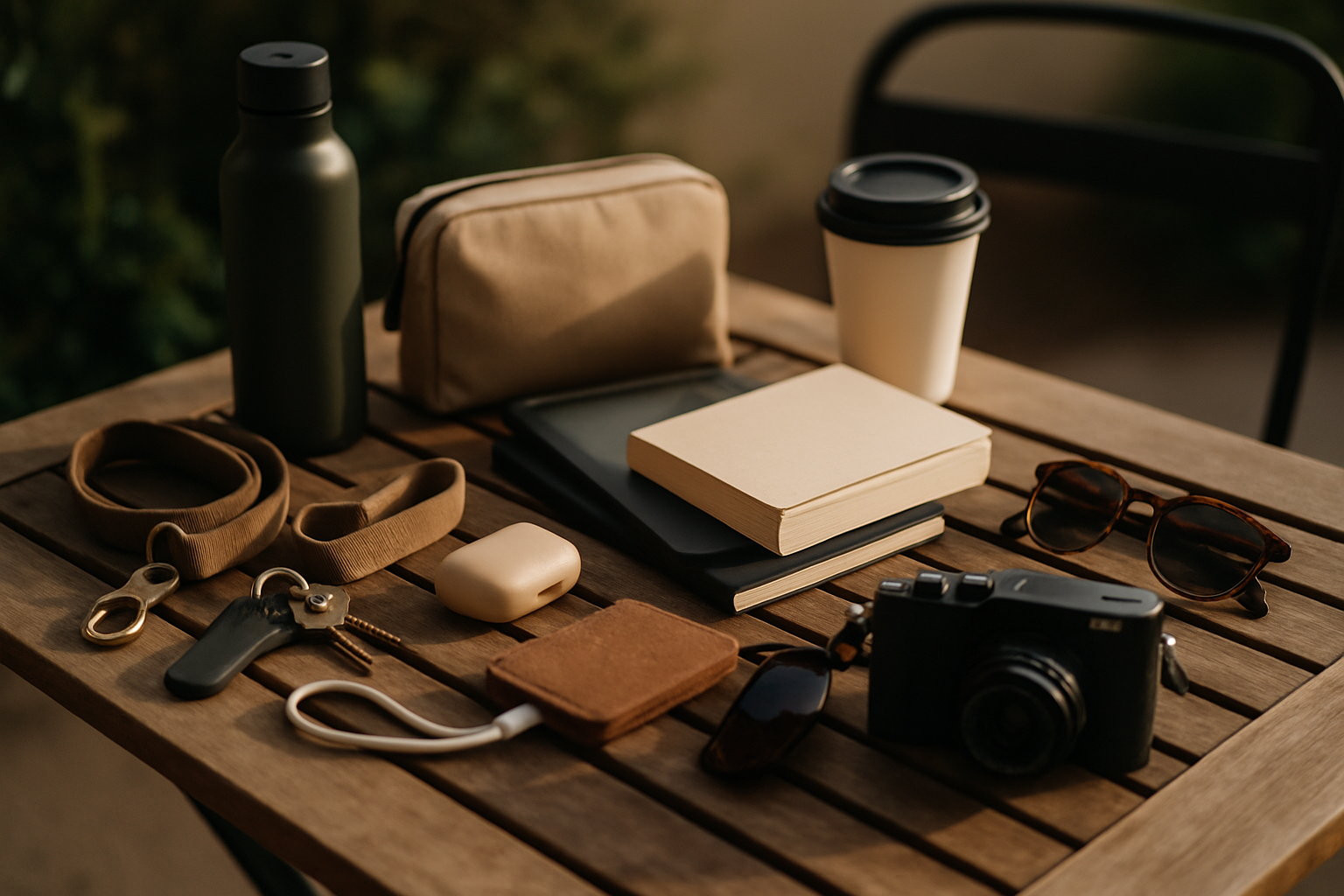
For a long time, I thought a productive outdoor workday meant bringing more tech. More battery, more cables, more backup devices, more ways to stay “online.” In reality, that was exactly what made my café sessions feel scattered. I’d sit down to write in Lisbon, answer three messages I didn’t need to answer, fiddle with my bag, take my dog out for a quick walk, come back, and feel like my brain had 27 tabs open. What finally helped wasn’t a fully optimized digital setup. It was building a screen-light one.
Now when I head out for a few hours between café stops and dog-walk breaks, I carry a small analog-heavy kit that keeps me focused without making me feel disconnected. It’s less about pretending I live in a cottage with no Wi-Fi and more about giving myself a calmer working rhythm: draft by hand, organize paper properly, keep small gear from becoming bag chaos, and use my phone more intentionally instead of constantly.
What was actually broken about my outdoor workflow
Before I bought anything new, I had to admit the problem wasn’t just “too much screen time.” It was friction. Tiny, annoying friction points that kept interrupting my focus.
I was carrying loose notes folded into my tote, random receipts with blog ideas scribbled on them, one dying pen, tangled charging cables, and a phone that was somehow both useful and distracting. If I wanted to step away for a dog walk and return to the same train of thought, I usually couldn’t. My workday kept resetting itself.
The big shift was realizing that a screen-light workday outdoors needs three things: quick capture, physical organization, and low-effort portability. If something is awkward to pack, fiddly to open, or too precious to use casually on a park bench, I stop reaching for it. That’s also why I’ve leaned more into simple paper tools lately alongside the portable pieces I already use in my broader dog-friendly workday setup.
What I wanted was a kit that could survive real life: coffee cups, windy terraces, dusty benches, short writing sprints, and the kind of stop-start day where I’m working for 40 minutes, walking for 20, then settling into a second café before heading home.
What I actually carry now
ANXRE 71" Phone Tripod
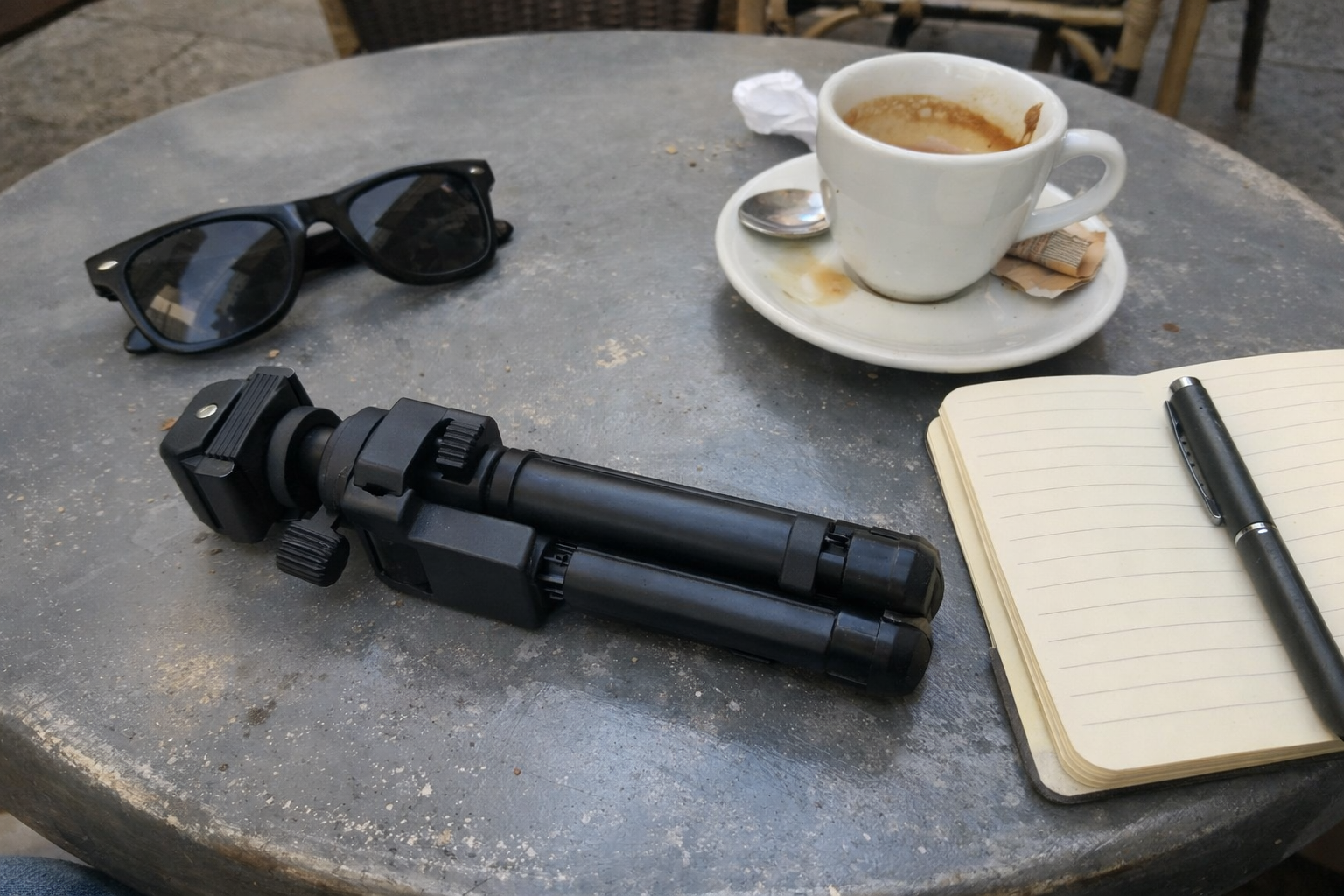
I didn’t add a tripod for content-creator reasons so much as for practical ones. I eventually started using the ANXRE 71" Phone Tripod because I was tired of propping my phone against sugar jars, water glasses, or my bag whenever I wanted a hands-free call, a quick timer photo, or a stable angle to record a note to myself while walking through ideas. It folds down small enough that I don’t resent carrying it, and the remote is the kind of feature I didn’t think I needed until I started actually using it outdoors. I mostly keep it low and simple rather than fully extended, but having the extra height available is useful in park settings or for awkward café tables.
What I Appreciate
- ✅ Folds down smaller than I expected for something this tall
- ✅ Useful for hands-free calls, note-taking videos, and quick photos without balancing my phone on random objects
- ✅ The remote makes it easier to stay in flow instead of fussing with a timer
- ✅ Works with both phones and small camera gear
What Frustrates Me
- ❌ At full height, I still want to be careful using it in windier outdoor spots
- ❌ It’s one more object to carry, so it only earns its place when I know I’ll use it
- ❌ Not every café is spacious enough to set it up comfortably
A5 Grid Notebooks
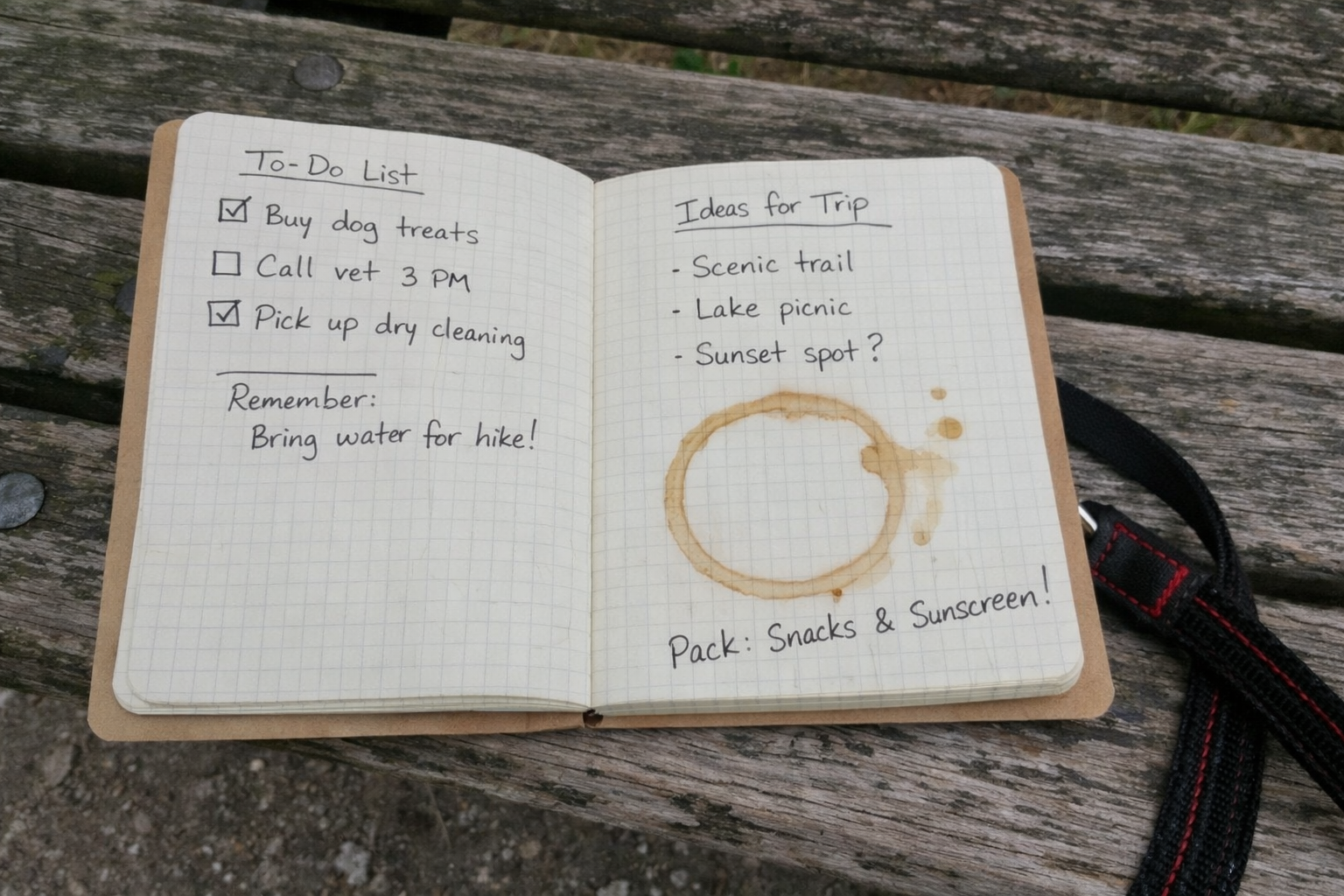
This is the least glamorous part of my bag and probably the most important. I picked up these A5 grid notebooks because I wanted something light, replaceable, and structured enough for outlines, checklists, rough SEO maps, and messy first drafts. Grid pages work especially well for my brain when I’m outdoors because they give just enough visual order without feeling stiff. I don’t carry one precious notebook anymore. I carry a simple one I’m happy to fill up, crease, and use properly.
What I Appreciate
- ✅ Light and easy to throw into any tote or backpack
- ✅ Grid paper is great for planning, sketching layouts, and rough writing structure
- ✅ Lay-flat format makes outdoor writing much less annoying
- ✅ Because they’re simple, I actually use them instead of “saving” them
What Frustrates Me
- ❌ These are functional, not beautiful heirloom notebooks
- ❌ If you prefer thick premium paper for fountain pens, they may feel basic
- ❌ A big pack only makes sense if you go through notebooks often
PANDRI Two Pocket Folders
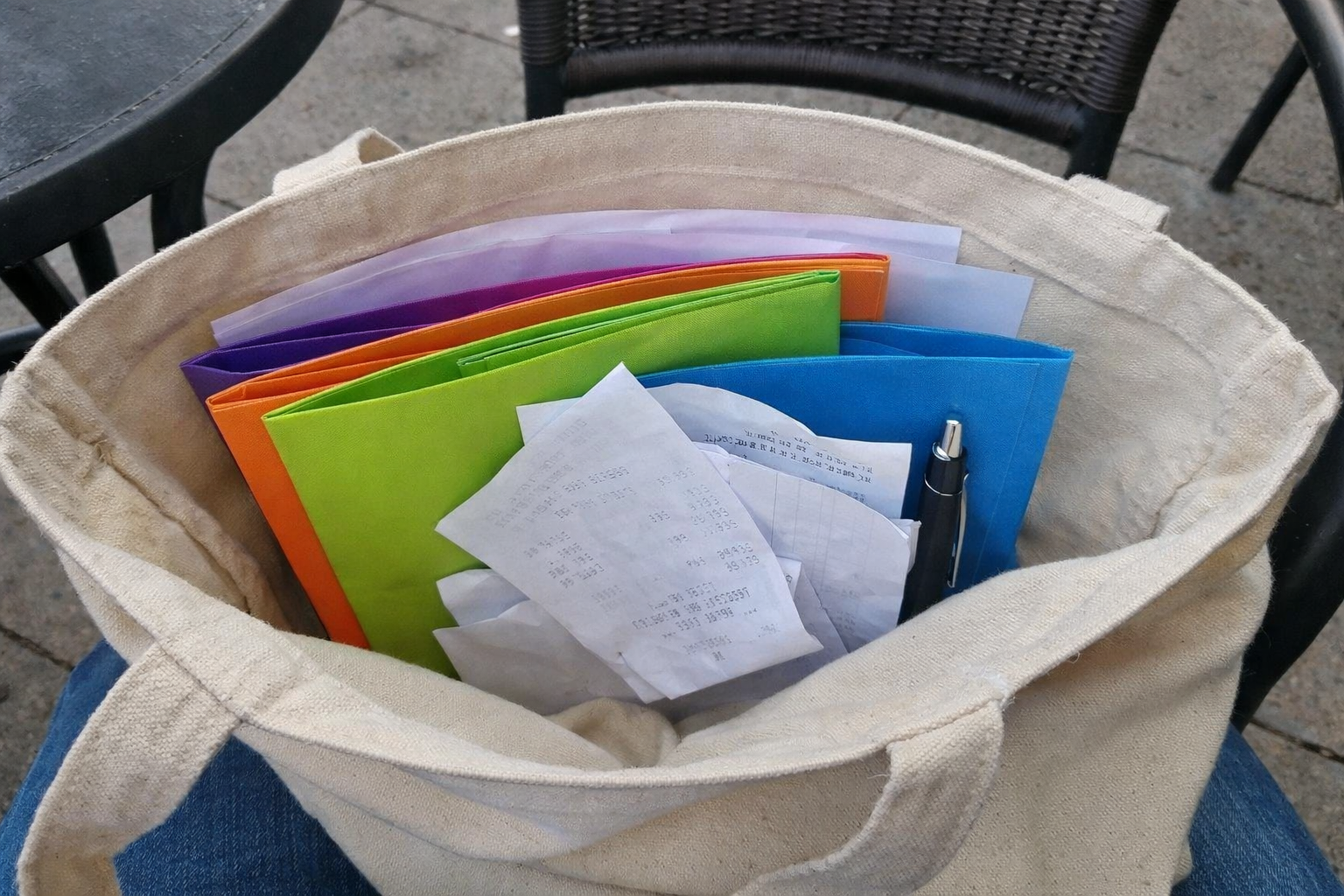
I know folders sound aggressively unromantic, but these PANDRI two pocket folders solved one of my most boring recurring problems: paper drift. Blog notes in one place, client printouts in another, invoices folded somewhere they absolutely shouldn’t be. I use color to separate types of work, and the pockets keep temporary paper from turning into bag clutter. For me, this matters because a screen-light setup falls apart quickly if the analog side becomes physically chaotic.
What I Appreciate
- ✅ Makes paper-based work feel portable instead of messy
- ✅ Easy color-coding for different projects or admin tasks
- ✅ Pockets are handy for loose notes, printouts, and receipts
- ✅ Prongs help if I want to keep a few pages together more securely
What Frustrates Me
- ❌ Not something I carry all at once; I rotate a couple into my bag
- ❌ Bulk packs are practical but not exactly minimal
- ❌ Better for organization than aesthetics
GOBAGS Clear Zipper Pouches
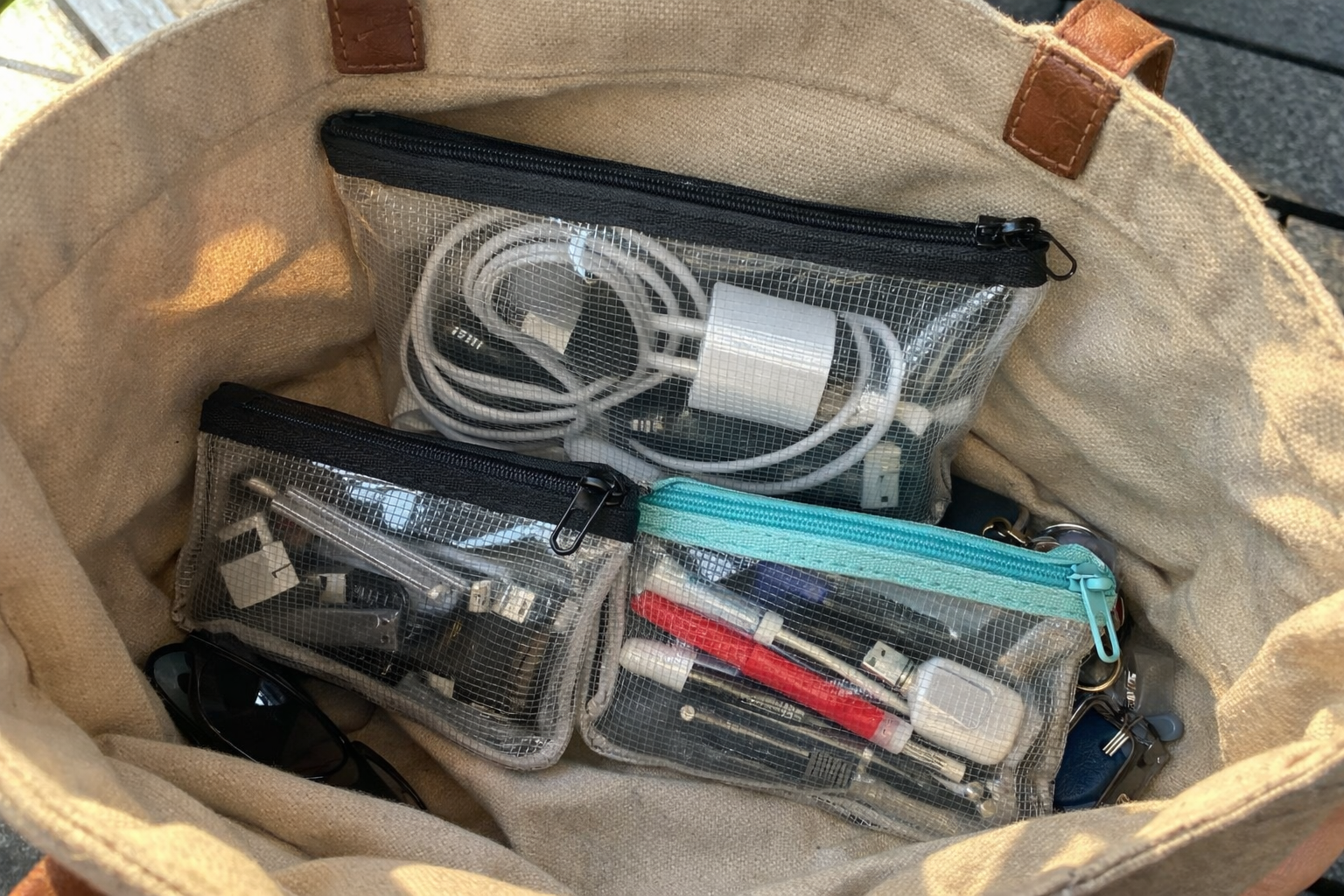
If you’ve ever spent two full minutes digging through your bag for an adapter while your coffee goes cold, this category makes sense immediately. I started using the GOBAGS clear zipper pouches because I wanted a simple visual system: one pouch for cables, one for writing tools, one for miscellaneous tiny things that always disappear. The clear design is what makes them work for me. I don’t want “organizational potential.” I want to see the exact item I need and pull it out fast.
What I Appreciate
- ✅ Clear material makes it easy to find things quickly
- ✅ Different sizes help separate tech from stationery
- ✅ Keeps my tote from becoming a single giant pocket of chaos
- ✅ Feels practical for travel and outdoor work, not just home storage
What Frustrates Me
- ❌ Pouches can tempt you to carry more tiny stuff than you need
- ❌ They help organization, but they don’t magically make a heavy bag lighter
- ❌ I still have to be disciplined about editing what stays inside
SMOOTHERPRO Retro Black Solid Brass Click Gel Pen
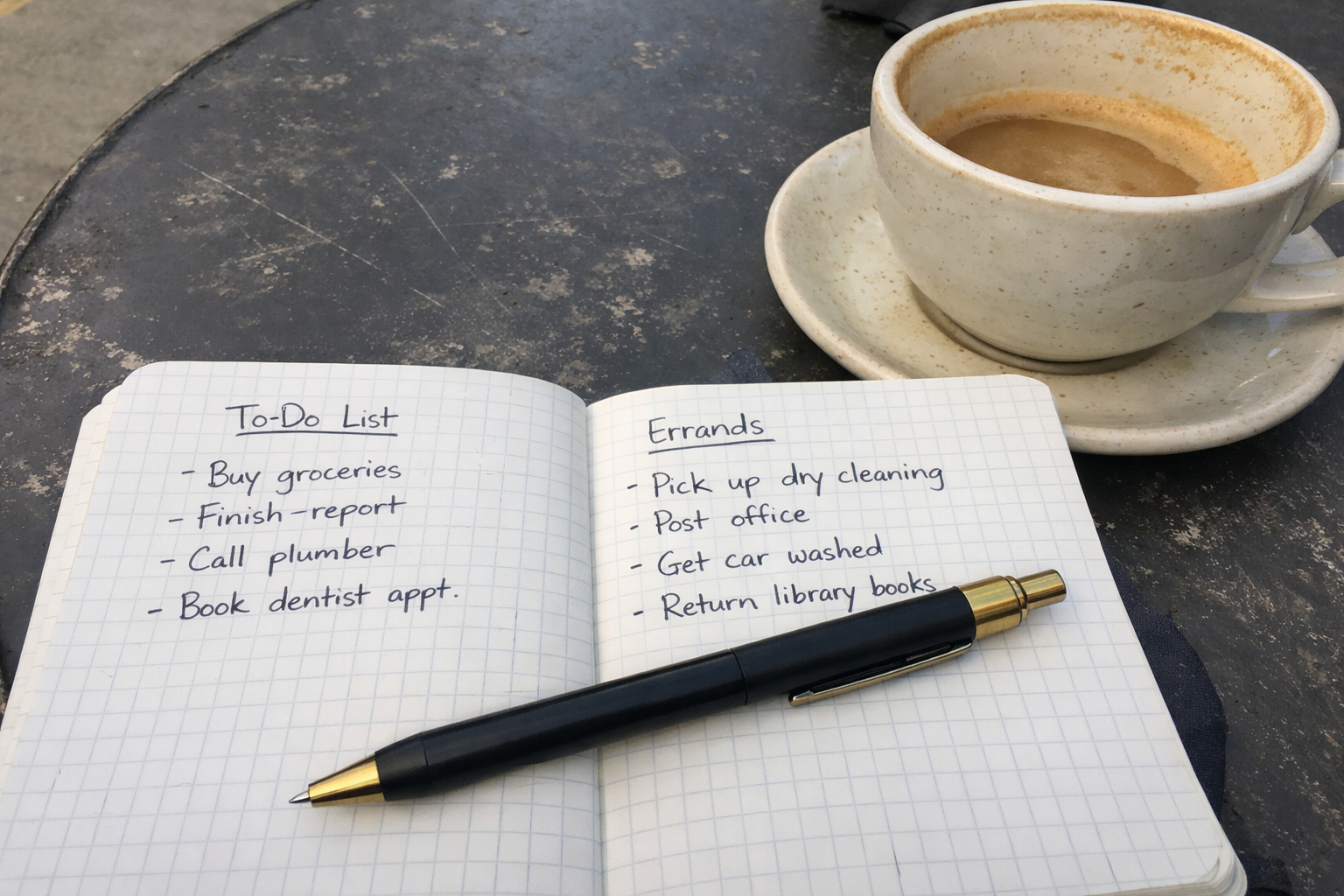
This SMOOTHERPRO brass click gel pen is one of those items that changed my workday more than I expected because it makes analog writing feel better for longer. I write a lot by hand outdoors now, especially when I’m outlining articles or sorting through client messaging before opening my laptop. A slightly weightier pen slows me down in a good way. It feels deliberate. The click mechanism is also ideal when I’m moving around between a bench, a café table, and a short dog walk, because I’m not dealing with loose caps rolling away or inky accidents inside my bag.
What I Appreciate
- ✅ Nicely weighted for longer handwriting sessions
- ✅ Click design is practical when working on the go
- ✅ Feels durable and less disposable than cheap pens
- ✅ Refills make it easier to keep using the same pen
What Frustrates Me
- ❌ The weight won’t be for everyone if you prefer ultra-light pens
- ❌ It feels more premium than a basic pen, so losing it would be annoying
- ❌ Brass and metal finishes can show wear over time depending on use
| Item | What it solves for me | Best for |
|---|---|---|
| Phone tripod | Hands-free phone use and more intentional recording | Café work, park breaks, quick solo photos or calls |
| Grid notebook | Low-distraction planning and drafting | Writing sessions, outlines, checklists |
| Pocket folders | Stops loose paper from taking over my bag | Client notes, admin, printouts |
| Clear zipper pouches | Keeps small gear visible and separated | Cables, pens, adapters, tiny essentials |
| Brass gel pen | Makes handwriting feel better and easier to sustain | Longer analog work sessions outdoors |
What I’m still refining
This setup works best when I treat it as a flexible rhythm, not a strict identity. Some days I still need my laptop open for longer than planned. Other days I can do almost everything with a notebook, my phone, and a decent place to sit. What I’m refining now is how to make those transitions even smoother, especially on longer outdoor days when I’m moving between shade, sun, and several short stops.
I’m also still tweaking how much paper I really need to carry. There’s a sweet spot between “prepared” and “suspiciously close to hauling a mobile office.” My ideal version is a bag that supports a four-hour work session without feeling overloaded, especially if I’m already carrying water, snacks, and dog basics. That same balance has mattered in my food setup too, which is probably why I’ve become so picky about what earns space after reading back through what I packed in my portable lunch setup for park work sessions and café days.
💡 The Final Verdict: worth it if your brain needs less digital noise
A screen-light outdoor workday is absolutely worth building if you do creative work, get mentally tired from constant notifications, or find that moving between cafés and walk breaks keeps breaking your focus. For me, the winning combination wasn’t one magical product. It was a small set of analog and portable tools that reduced friction and made it easier to stay present. If you mostly work from one desk all day, you probably don’t need all of this. But if your week includes outdoor writing sessions, flexible schedules, and a lot of movement, this kind of setup can make your workday feel calmer, lighter, and surprisingly more productive.
Disclaimer: As an Amazon Associate, I earn from qualifying purchases.
Author
-

Hi, I’m Anna — a freelance copywriter, SEO strategist, and full-time believer that good work can happen almost anywhere.
I’m based in Lisbon, but most days you’re just as likely to find me working from a shady park bench, a sunlit café terrace, or somewhere with a view worth opening my laptop for.
I’ve always been drawn to the ritual of creating a workspace that feels both beautiful and functional — one that makes long hours of focused work feel a little lighter, calmer, and more intentional.This blog grew out of that obsession.
I write about the gear and everyday tools that make working from anywhere actually work: noise-canceling headphones that help you find deep focus in noisy spaces, portable tech that survives long outdoor sessions, laptop accessories that balance design with practicality, and analog notebooks and pens that pull you away from screens when you need to reset. I care about how things perform, but also how they feel — the weight of a notebook in your bag, the comfort of headphones after four hours, the difference a well-designed sleeve or power bank makes when you’re carrying your office with you.
My reviews are shaped by real life, not specs alone. I’m interested in what it’s like to actually use something during a long afternoon outside: how visible your screen stays in bright light, whether your battery holds up, how portable your setup feels after walking across the city, and whether a product still feels good to use once the novelty wears off.
When I’m not testing gear or writing, I’m usually hiking with my rescue dog, hunting for a café with the right balance of quiet and atmosphere, or filling pages in my bullet journal as a way to slow down and think offline.
This space is for people who want their work tools to be useful, beautiful, and thoughtfully chosen — whether you’re working remotely, traveling often, or just trying to make your everyday setup feel a little better.
Welcome in.
Leave a Reply