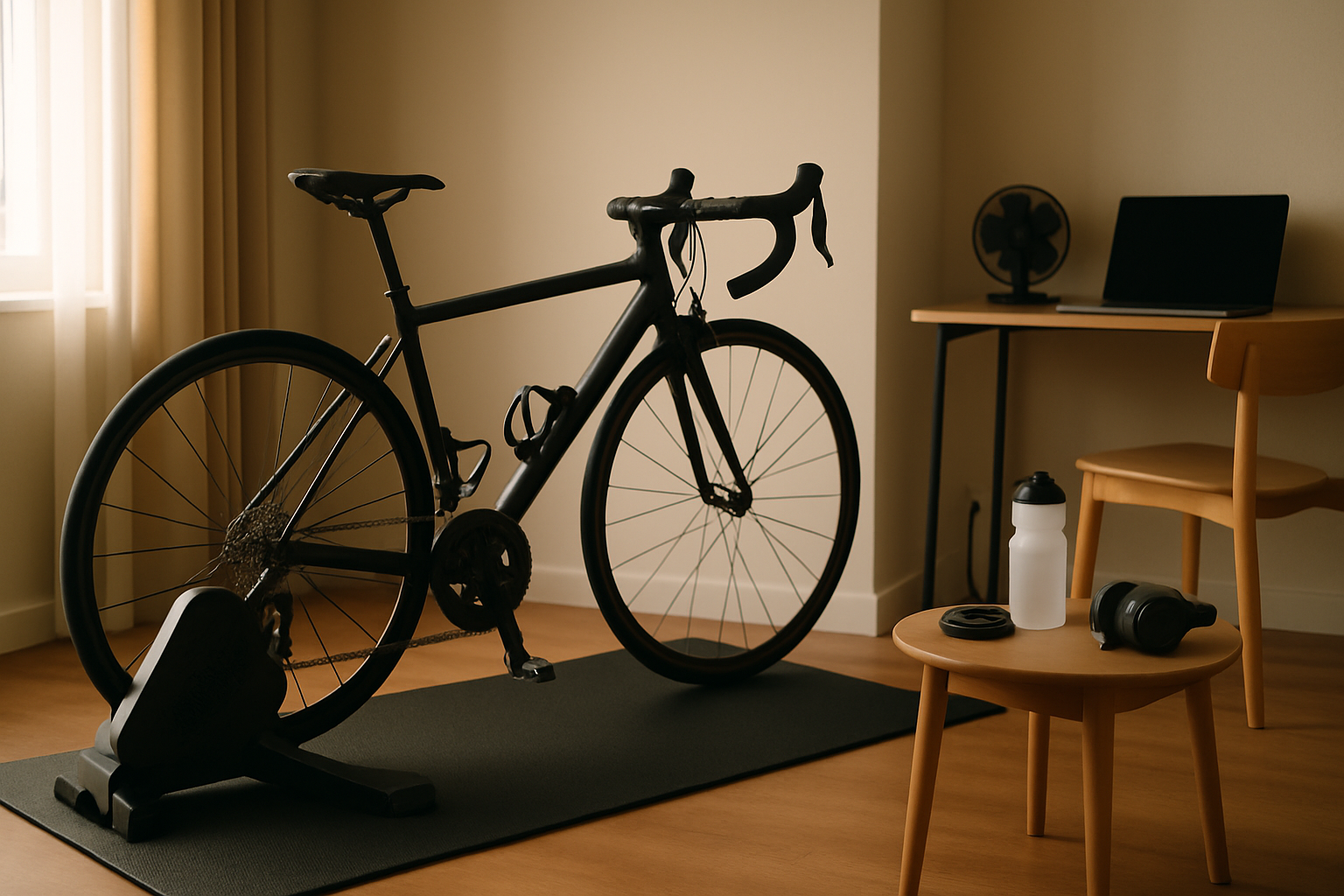
For a long time, I had the same bad pattern every remote worker has at some point: sit for hours, promise myself I’d work out later, then hit 7 PM with fried eyes, tight hips, and zero motivation to get on a bike. Living in a New York apartment made it worse. I didn’t just need an indoor cycling setup that fit physically. I needed one that wouldn’t annoy neighbors, dominate my floor space, or feel so inconvenient that I’d stop using it after two weeks.
After testing a few approaches, I realized the best apartment-friendly indoor cycling corner isn’t necessarily the most hardcore one. It’s the one that keeps noise down, stores cleanly, and fits naturally into a work-from-home routine without turning your living room into a permanent gym.
What Actually Matters in a Small-Space Cycling Setup
Before pulling out my credit card, I had to figure out what was actually broken about my routine. The problem wasn’t just “I need cardio.” It was that my workday had no built-in movement, and my apartment had no room for a giant dedicated fitness machine. On top of that, noise matters more in an apartment than most fitness reviews admit. A setup can be excellent in a garage or basement and still be a terrible choice on the third floor over someone else’s ceiling.
So my criteria got pretty strict: low drivetrain noise, minimal floor vibration, compact storage, fast setup, and enough comfort that I could use it in short 20- to 40-minute blocks between calls. I also wanted a version of the setup that could support true workouts and another that could support lighter movement during laptop tasks. That distinction ended up being important, because “work while pedaling” and “train hard indoors” are not the same use case.
The biggest lesson: if you’re building an apartment-friendly indoor cycling corner, the floor protection and noise control strategy matter almost as much as the bike itself. That’s where most of the realism lives.
The Gear That Actually Made This Work
Alpcour Bike Trainer Stand for Indoor Riding
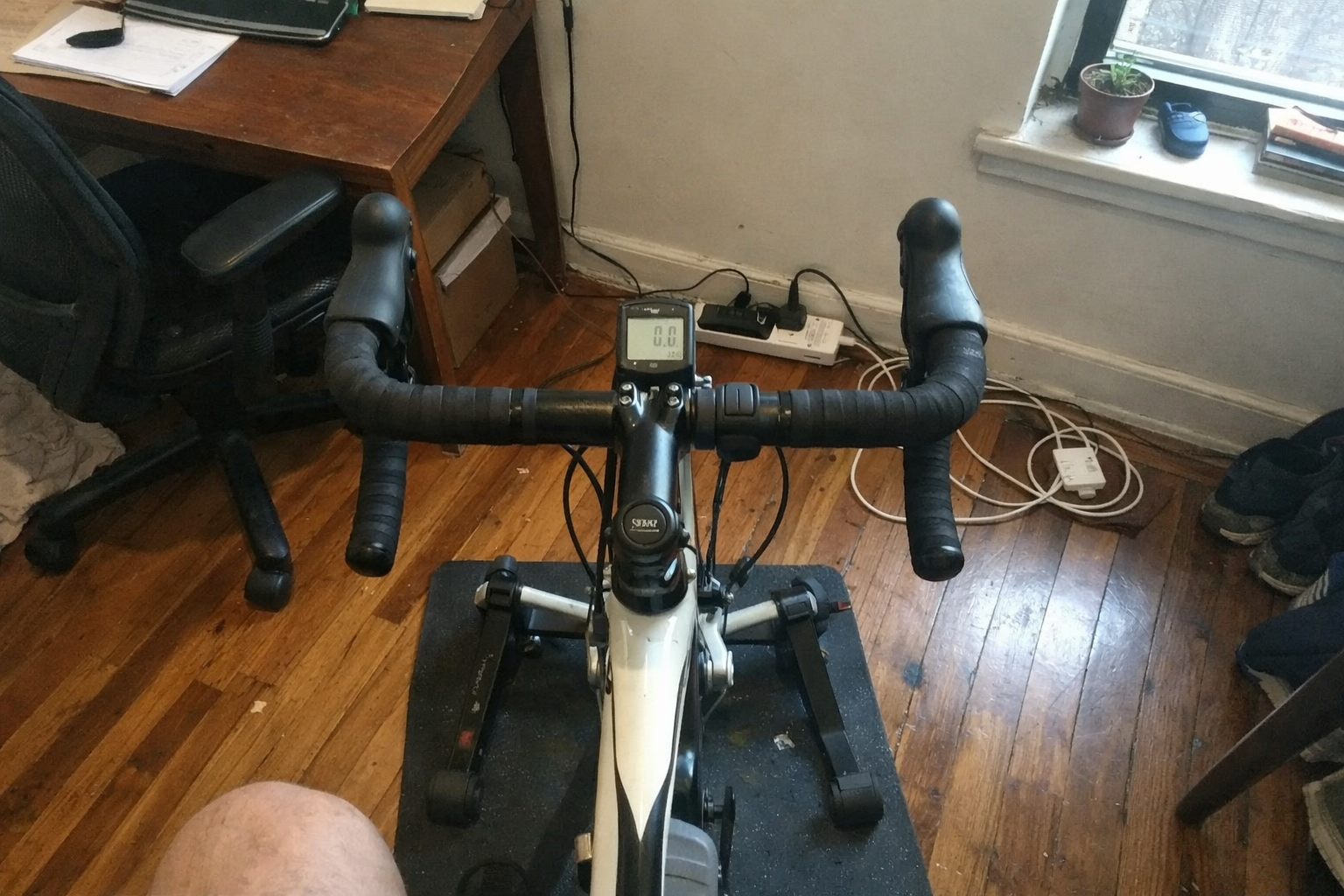
This was my answer for actual training days. I already had a bike I liked, so instead of buying a full-size spin bike right away, I went with the Alpcour Bike Trainer Stand. What I like about this format is ROI: if you already own a road or hybrid bike, a trainer gives you a much lower-cost way into indoor cycling. In practice, I found it stable enough for structured efforts and compact enough to fold away when I needed my floor back. It’s not silent, because no tire-on-trainer setup is truly silent, but the magnetic resistance design kept the noise more manageable than I expected once I paid attention to tire pressure, matting, and placement.
What I Appreciate
- ✅ Good value if you already own a compatible bike
- ✅ Folds down more easily than a full exercise bike
- ✅ Resistance control makes interval work feel more structured
- ✅ Stable enough for steady efforts in a small apartment
What Frustrates Me
- ❌ Still louder than a purpose-built magnetic exercise bike because the rear tire is part of the system
- ❌ Setup takes more effort than just hopping on a standalone bike
- ❌ Best for workouts, not really ideal for laptop work
FitDesk Standing Exercise Bike Desk 3.0
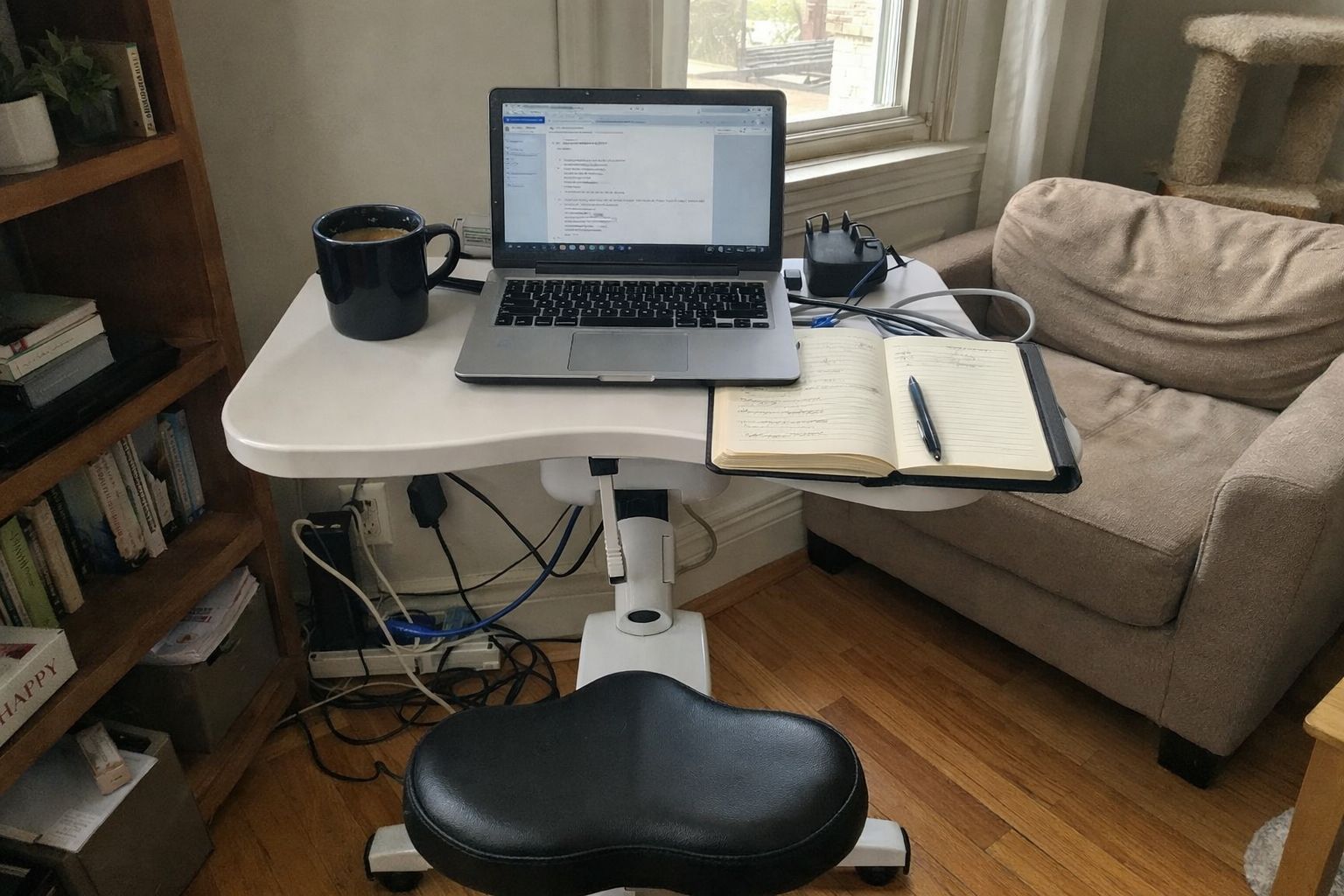
For the work-from-home side of the equation, the FitDesk Exercise Bike Desk 3.0 solved a different problem entirely. This is not the machine I’d pick for hard intervals, but it is the one that made low-intensity movement realistic during email, reporting, and meetings where I mostly listen. That distinction matters. If your goal is to stop being completely sedentary during the workday, a desk bike can be much more useful than a training-focused setup. The desk surface is the selling point here. It turns movement into background behavior instead of a separate event you have to psych yourself up for.
What I Appreciate
- ✅ Better fit for light pedaling during laptop work
- ✅ Quiet enough for home office use in most situations
- ✅ Foldable design makes it more apartment-friendly than it looks
- ✅ More approachable if you want consistency over intensity
What Frustrates Me
- ❌ Not a substitute for a serious cycling trainer if you want harder workouts
- ❌ Desk position may need some trial and error depending on your height and typing style
- ❌ Takes up enough visual space that you’ll want a dedicated corner for it
Marcy Foldable Upright Exercise Bike
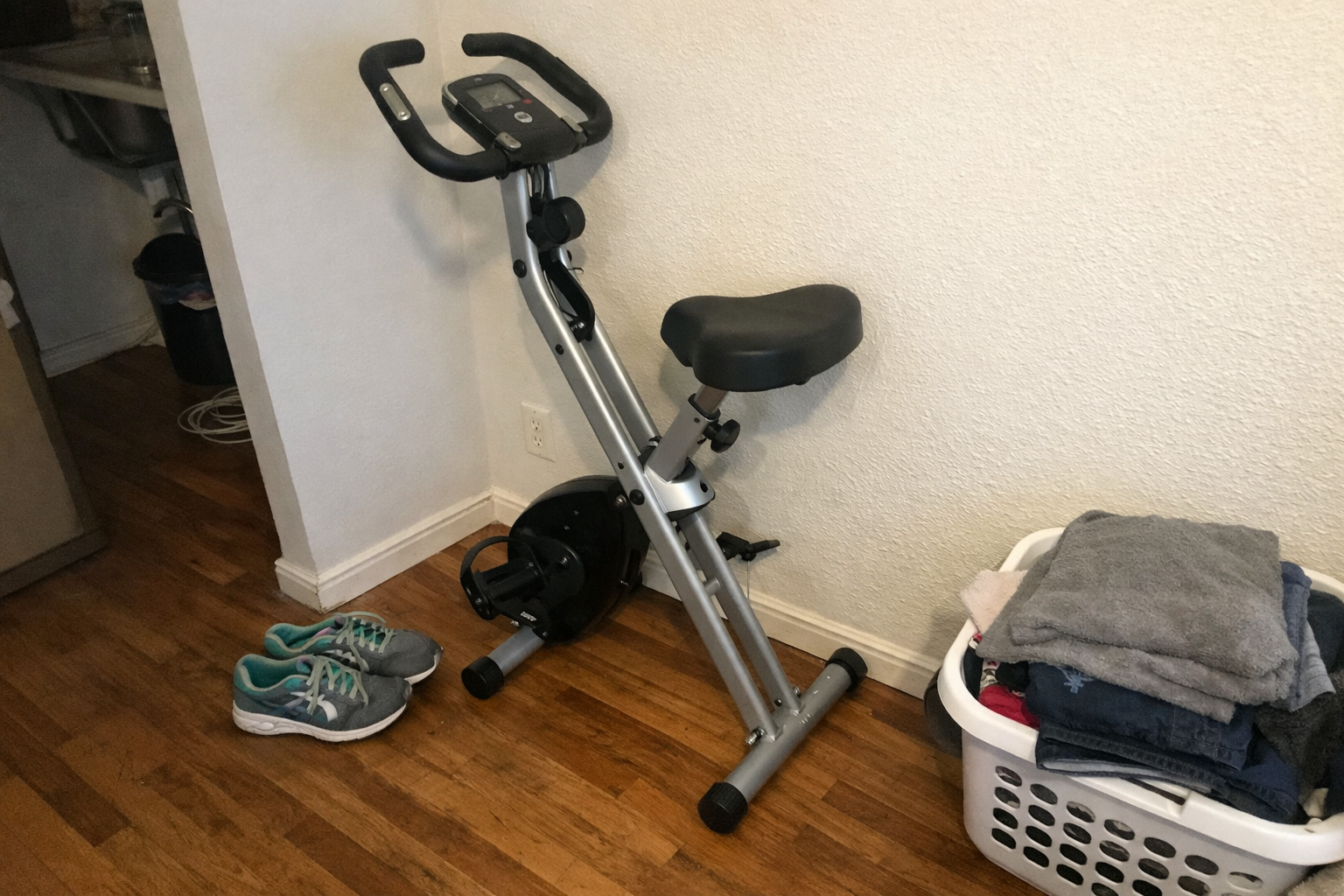
If I were recommending a middle-ground option for most people, it would be something like the Marcy Foldable Upright Exercise Bike. This sits between the other two approaches. It’s simpler than a trainer setup and more workout-oriented than a desk bike. I like this category because it reduces friction: no mounting your own bike, no extra tray to manage, no full spin studio footprint. If your main goal is quiet cardio in a small apartment, this is probably the most straightforward answer.
What I Appreciate
- ✅ Compact footprint and easier storage than many exercise bikes
- ✅ Magnetic resistance tends to be apartment-friendlier than louder setups
- ✅ Fast to start using with almost no setup friction
- ✅ Good balance of simplicity and workout usefulness
What Frustrates Me
- ❌ Less bike-like feel than using your own road bike on a trainer
- ❌ Basic display and feature set compared with more premium options
- ❌ Not designed for productive laptop work the way a desk bike is
Polar H10 Heart Rate Monitor Chest Strap
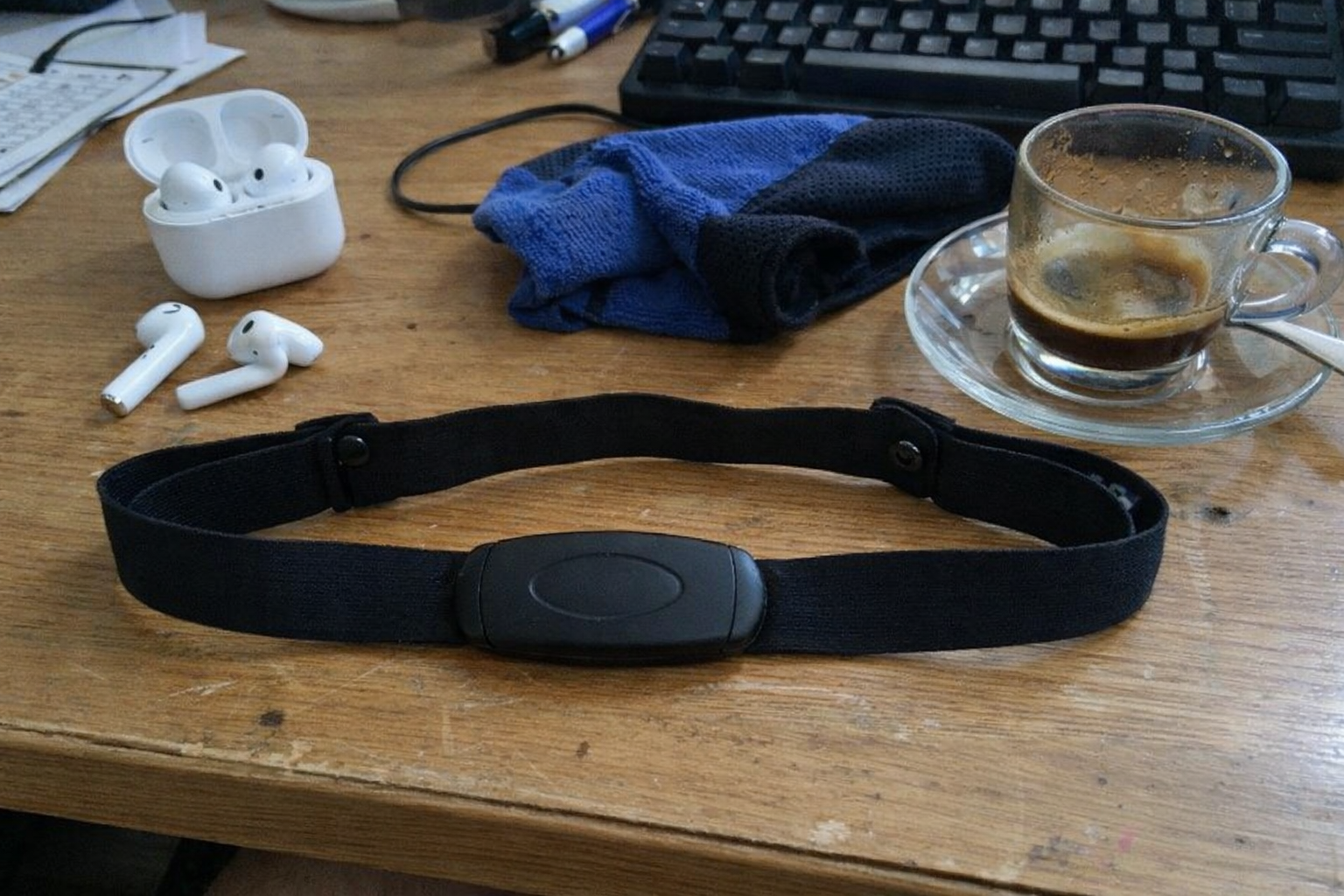
The Polar H10 was one of those upgrades I resisted because it seemed optional. It isn’t essential, but it made my indoor cycling routine much more measurable. When you work from home, it’s easy to trick yourself into thinking a casual pedal session was harder than it was. Heart rate data cleaned that up for me. I use it to keep easy rides actually easy and to make short interval sessions more intentional. It’s also useful if you’re switching between a trainer, foldable bike, or desk bike and want one metric that stays consistent.
What I Appreciate
- ✅ More reliable training feedback than guessing effort
- ✅ Useful across multiple bikes and apps
- ✅ Helps separate recovery rides from real workouts
- ✅ Compact, durable, and easy to keep in a drawer
What Frustrates Me
- ❌ A chest strap is still less convenient than doing nothing at all
- ❌ Needs occasional battery replacement and basic upkeep
- ❌ Probably overkill if you only want very casual movement
Exercise Bike Mat for Hardwood Floor Protector
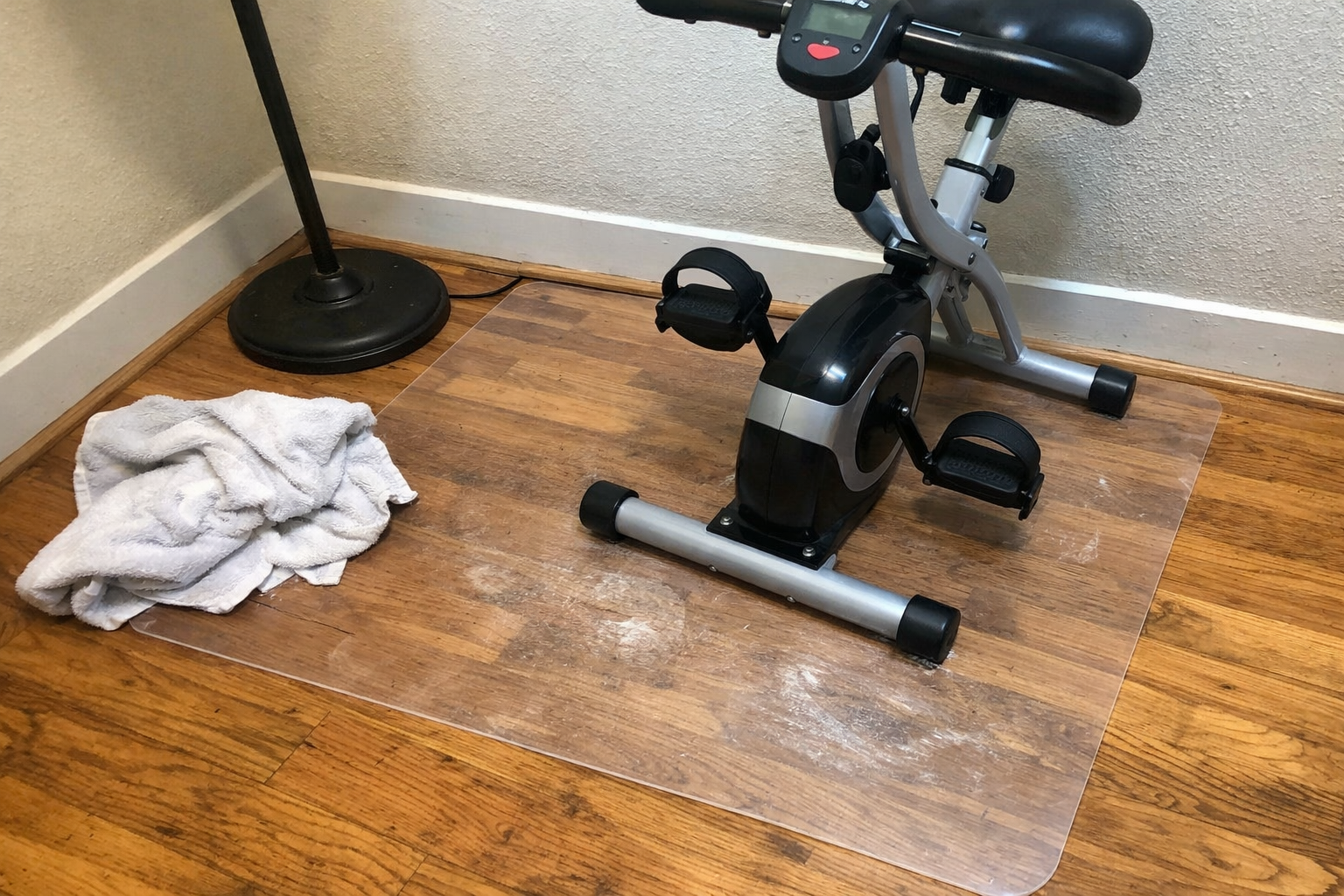
This ended up being one of the least glamorous but highest-ROI parts of the whole setup. I added the clear exercise bike mat mainly to protect hardwood floors, but it also helped with stability and made the corner feel more intentional. In apartment living, floor contact matters. A mat won’t magically eliminate noise, but it can reduce shifting, catch sweat, and create a cleaner interface between the bike and the floor. I also like the clear style because it doesn’t visually eat the room the way a big black gym mat can.
What I Appreciate
- ✅ Protects hardwood from pressure points, sweat, and scuffs
- ✅ Helps reduce movement and makes the setup feel more planted
- ✅ Clear finish is less visually heavy in a small apartment
- ✅ Easy to wipe down after rides
What Frustrates Me
- ❌ Doesn’t fully solve noise if the bike itself is the loud part
- ❌ You still need to size the mat correctly for your equipment
- ❌ Not exciting, even though it’s one of the smarter purchases here
Which Setup Makes Sense for Your Routine
| Use Case | Best Fit | Why I’d Choose It |
|---|---|---|
| You already own a bike and want real workouts | Alpcour Bike Trainer Stand | Best value if you want structured training without buying a full indoor bike |
| You want to move while answering emails or taking lighter meetings | FitDesk Exercise Bike Desk 3.0 | Most practical for blending gentle activity into a work-from-home day |
| You want simple, compact cardio with minimal setup friction | Marcy Foldable Upright Exercise Bike | The easiest all-around apartment option for consistency |
| You want better effort tracking | Polar H10 | Adds useful data without changing your floor setup |
| You want to protect floors and reduce mess | Exercise Bike Mat | Small purchase, big improvement in apartment practicality |
If I had to summarize it simply: the trainer is for cyclists, the desk bike is for remote workers, and the foldable upright bike is for people who just want a low-drama way to get cardio done in a small space.
What I’m Still Tweaking
I’m still dialing in the corner. The next upgrade for me is better airflow and storage, because indoor cycling in a small apartment gets humid fast and clutter builds up around the bike if you let it. I’m also refining how I use each setup: trainer for focused sessions, desk bike for low-intensity movement, and heart rate tracking to keep both honest. The goal now isn’t just fitness. It’s building a routine where movement fits cleanly into a normal workday instead of competing with it.
💡 The Final Verdict: Worth It If You Design for Real Life
Building a low-noise, apartment-friendly indoor cycling corner is absolutely worth the effort if you work from home and struggle to stay active without leaving the apartment. The key is choosing the format that matches your actual behavior, not your idealized one. If you want true workouts, a trainer setup makes sense. If you want movement during the workday, a desk bike is the smarter investment. And if you want the simplest path to consistent cardio, a foldable upright bike is probably the best place to start. For most people, the winning setup is the one that’s quiet enough, compact enough, and easy enough to use on an ordinary Tuesday.
Disclaimer: As an Amazon Associate, I earn from qualifying purchases.
Author
-

Hi, I’m Mateo — a remote business analyst and workspace consultant based in New York City.
I started this blog out of a long-term interest in productivity, ergonomics, and the tools that make daily work more efficient. Over the years, I’ve spent a lot of time refining my own setup and comparing different products, from premium office furniture to mechanical keyboards and coffee equipment for the home office. What began as a personal habit turned into a more structured way of reviewing and analyzing workspace gear.
This blog focuses on premium productivity tools and ergonomic equipment, with an emphasis on performance, build quality, durability, and long-term value. I cover products like standing desks, ergonomic chairs, multi-monitor setups, keyboard components, and high-end coffee machines, always with attention to how they hold up in real working conditions.
My approach is straightforward and detail-oriented. I look at products the same way I look at systems: by evaluating trade-offs, comparing alternatives, and asking whether the higher price is actually justified. That means I often compare premium products against strong mid-range options, break down the pros and cons clearly, and focus on return on investment rather than hype.
Outside of work, I’m interested in custom mechanical keyboards, espresso, and indoor cycling — all things that, in different ways, involve precision, consistency, and incremental improvement.
If you’re building a workspace that is comfortable, functional, and designed to last, this blog is for you.
Leave a Reply