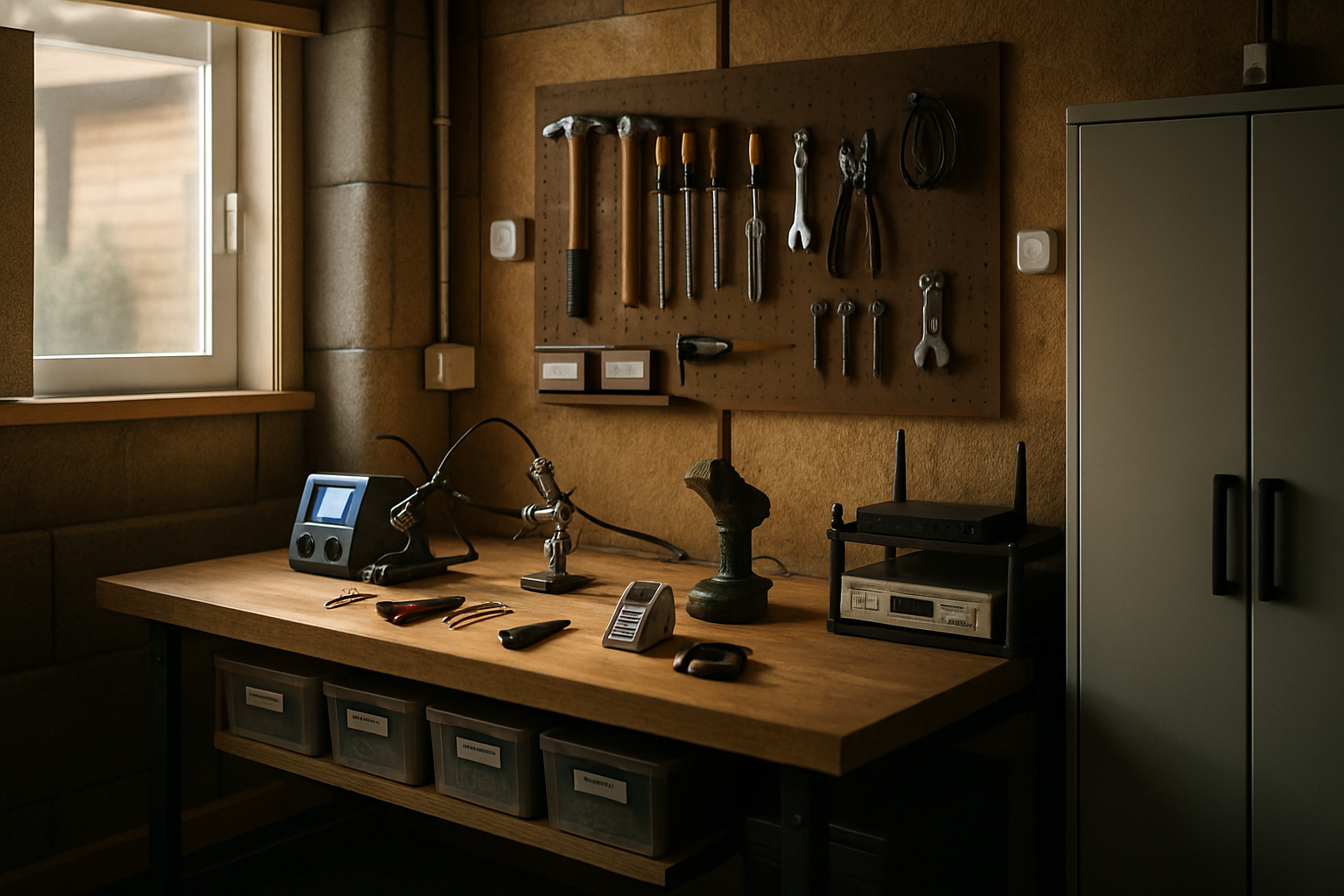
For a long time, my garage was trying to be three things at once: a repair bench, a storage dump, and a half-serious home lab overflow zone. That setup worked right up until Seattle weather reminded me that garages are not clean, climate-perfect tech spaces. Moisture drifted in, cardboard got soft, extension cords multiplied, and every time I needed one small tool or adapter, I had to dig through three unrelated piles to find it.
What finally pushed me to fix it was realizing I was treating the garage like an indoor office instead of a rough-use workspace. If you want a smart workshop that can handle DIY repairs, spare networking gear, battery chargers, and the occasional electrical project, it has to be organized, protected, and a whole lot more deliberate than “put a table near the wall and hope for the best.”
What I Had to Get Right Before Buying Anything
Before pulling out my credit card, I had to figure out what was actually broken about my garage workflow. For me, it came down to four problems.
First, I had no protected zones. Tools, smart home parts, Ethernet patch cables, and delicate electronics were all living in the same dusty environment. Second, I had bad vertical storage, which meant everything flat enough ended up on the bench. Third, power distribution was sketchier than I liked. I work in IT, so I’m fussy about cable routing and safety, and I was tired of temporary solutions becoming permanent ones. Fourth, I needed the whole setup to survive seasonal dampness and temperature swings without babying it.
So my criteria got pretty simple: keep small parts visible, keep sensitive gear enclosed, use storage that can handle a garage environment, and clean up power in a way that doesn’t make me nervous every time I leave the house. That gave me a much better filter for picking parts for a weatherproof garage workshop instead of just buying random “garage organization” stuff.
I’m also going to say the obvious out loud: if you’re doing actual electrical work, follow code, verify local requirements, and if something is outside your comfort zone, bring in a licensed electrician. I’m comfortable around wiring, but I still treat that category with respect.
The Gear That Made My Garage Workshop Usable
INCLY Pegboard Accessories Organizer Kit
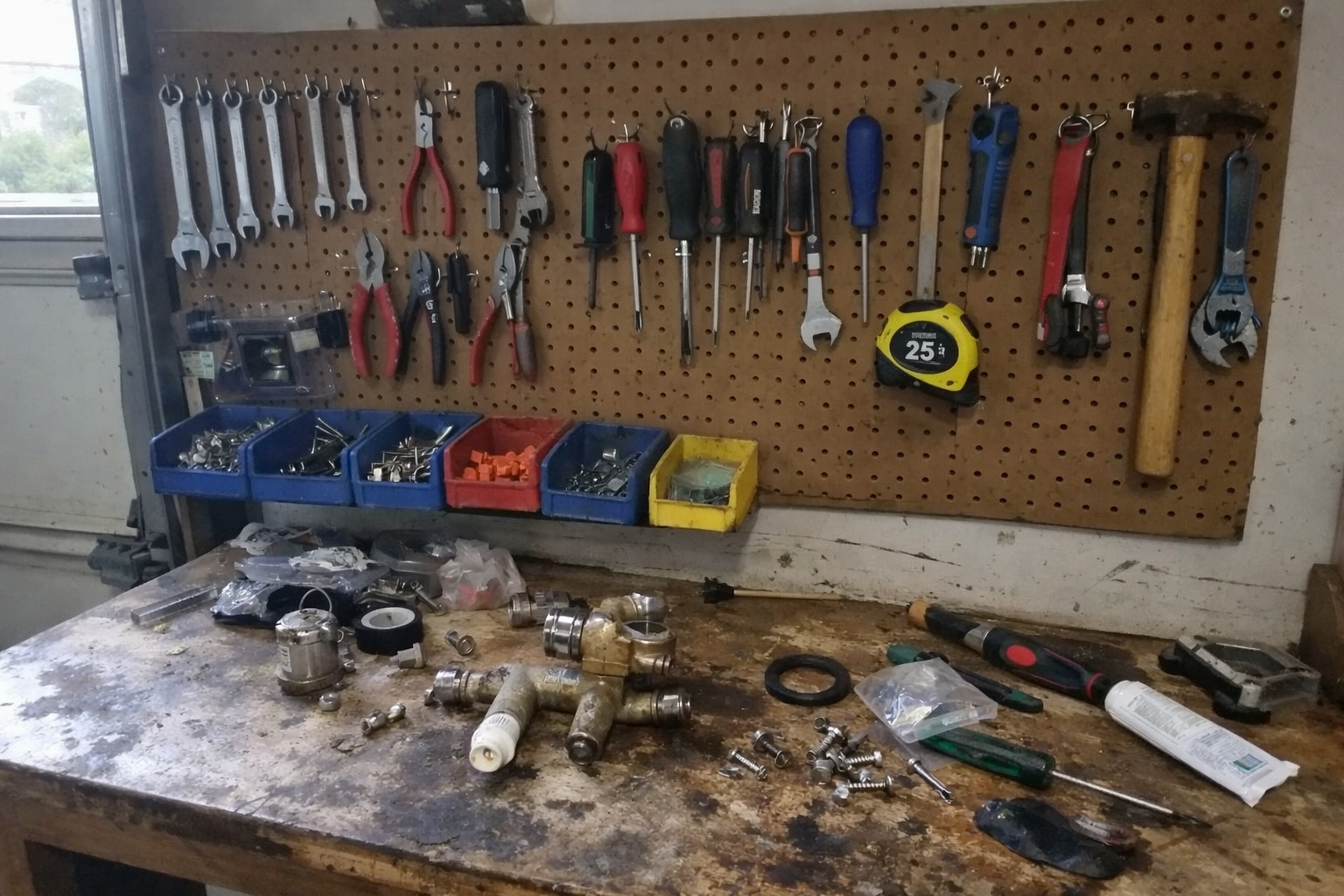
The first thing I fixed was the “where did I put that” problem. I already had pegboard up, but it was underused because I never had the right mix of hooks and bins. I ended up using the INCLY pegboard accessories kit because it gave me enough variety to finally organize the weird little stuff that clutters a smart workshop: crimpers, flush cutters, zip ties, test leads, wall anchors, and tiny bags of screws. The bins matter more than I expected. In a garage, being able to see small hardware at a glance saves a ton of time.
What I Appreciate
- ✅ Good mix of hooks and bins for both tools and small electrical parts
- ✅ Peg locks help keep hooks from getting knocked loose
- ✅ Lets me use wall space instead of burying everything on the bench
What Frustrates Me
- ❌ It’s a big assortment, so you’ll probably end up with a few pieces you don’t use
- ❌ The setup only feels great if your pegboard is mounted solidly to begin with
12 AWG THHN Wire 25FT 3-Color Set
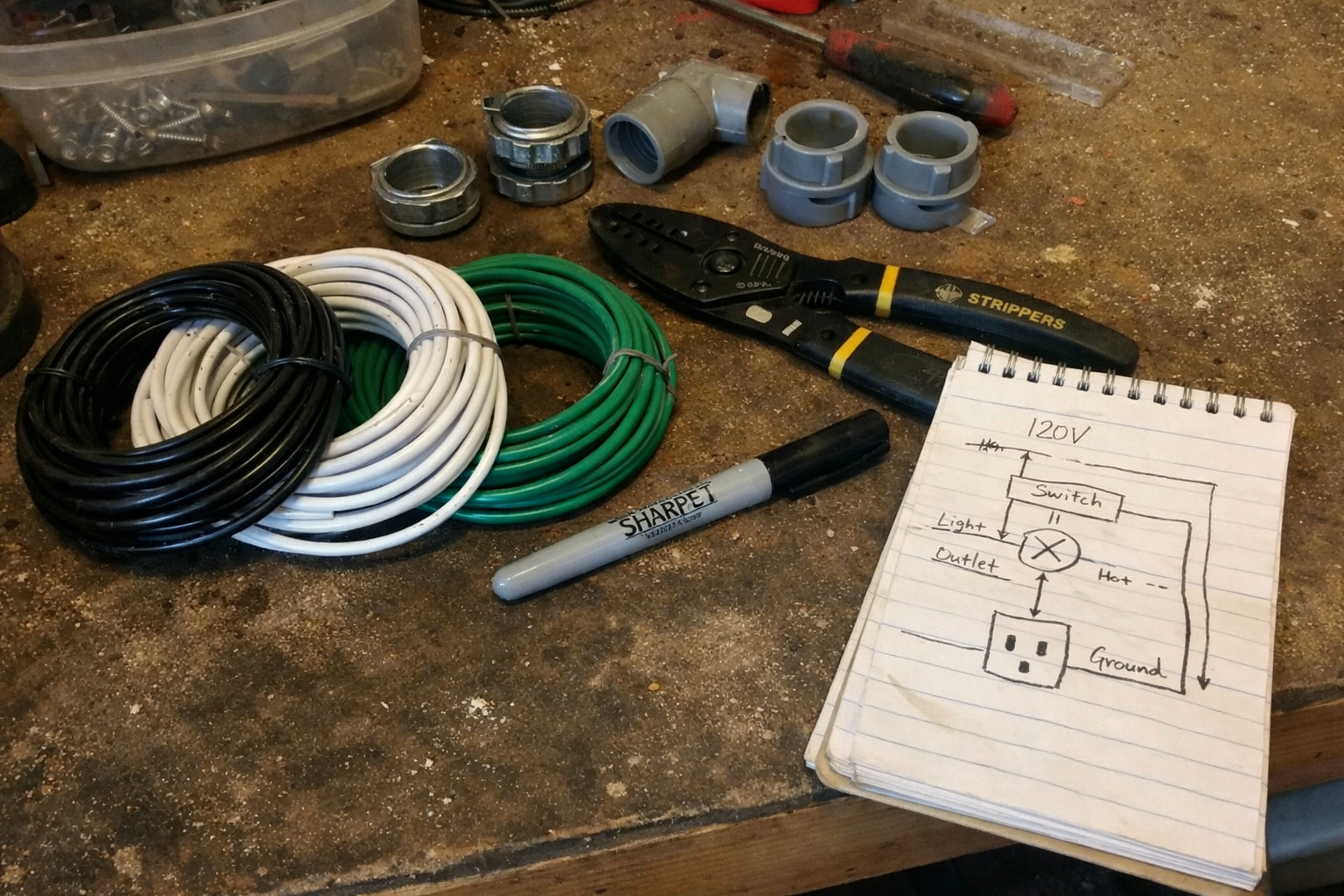
For workshop power cleanup, I used the 12 AWG THHN 3-color wire set on a conduit-based run where I wanted something cleaner and more durable than loose leftover wire from different spools. I like that the conductors are color-coded and pre-grouped, because it cuts down on dumb mistakes when you’re routing in a cramped garage corner. The stranded copper also pulls a lot more nicely than stiffer wire when you’re trying not to fight every bend. For a garage smart workshop, tidy power is part of weather resistance too, because once wiring is properly routed and protected, there’s less chance of it getting snagged, stepped on, or exposed to the general abuse garages are known for.
What I Appreciate
- ✅ Clear black/white/green identification keeps runs easier to track
- ✅ Stranded wire is more flexible for conduit work
- ✅ Better than piecing together random scraps for a clean install
What Frustrates Me
- ❌ Only makes sense if you already know what kind of circuit and installation you need
- ❌ Not a beginner shortcut for learning electrical work safely
Hard Storage Case with Customizable Foam Insert
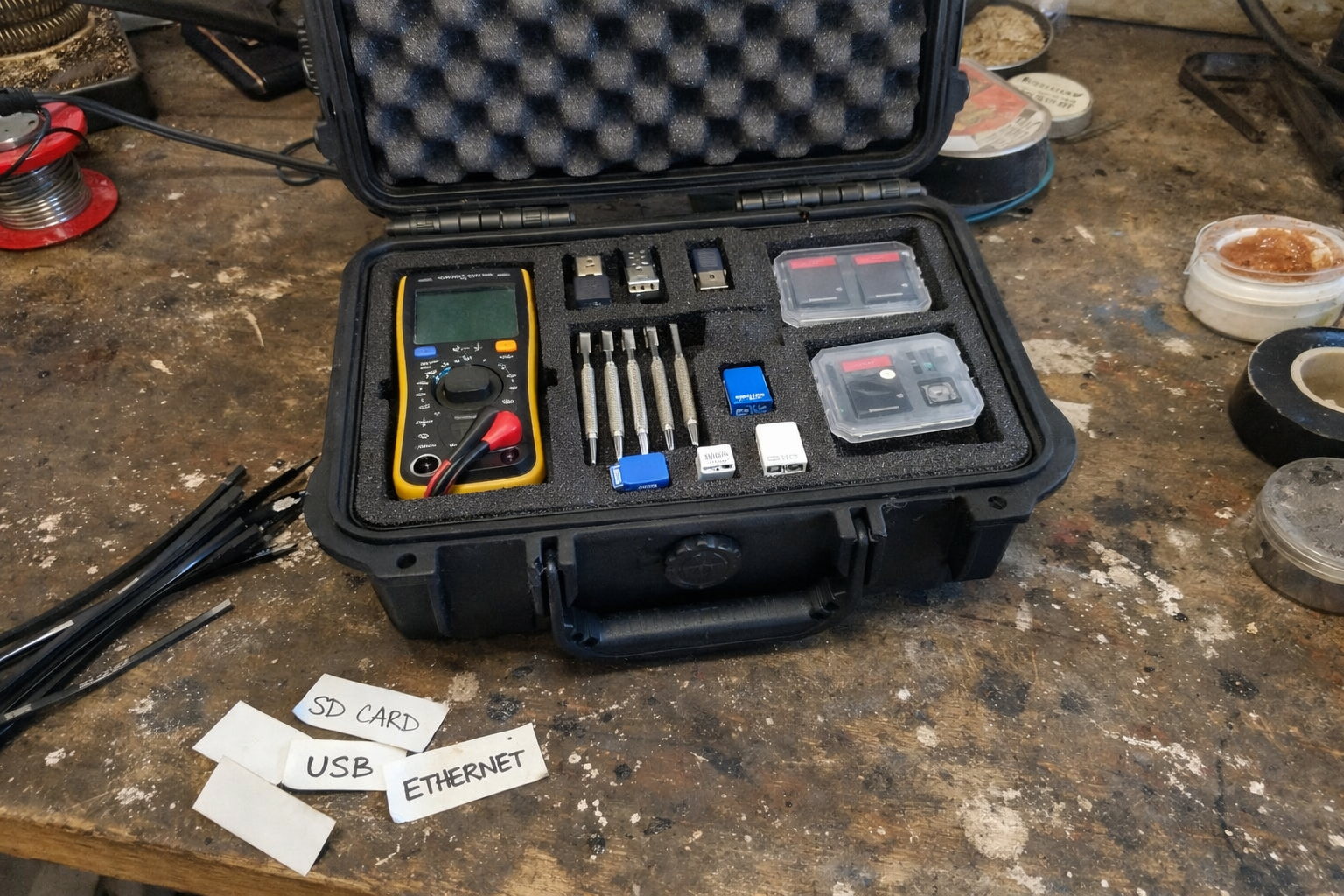
This was one of those boring purchases that ended up solving a real problem. I picked up this hard storage case with customizable foam for the smaller stuff that absolutely should not live loose in a garage drawer: specialty drivers, diagnostic adapters, spare SSD enclosures, and a couple of finicky little instruments I use for smart home and networking work. In a weather-shifting garage, enclosed storage matters. Even if your garage never fully leaks, dust and damp air get into everything. A case like this gives fragile gear its own protected home, and the foam keeps parts from rattling together.
What I Appreciate
- ✅ Foam insert makes it easy to dedicate spaces for delicate tools
- ✅ Much better protection than tossing electronics into a drawer
- ✅ Compact enough to grab when I’m moving between bench and house
What Frustrates Me
- ❌ You have to spend a few minutes planning the foam layout or you waste space
- ❌ Interior size is better for compact gear than bulky test equipment
SISESOL Metal Storage Cabinet with Wheels
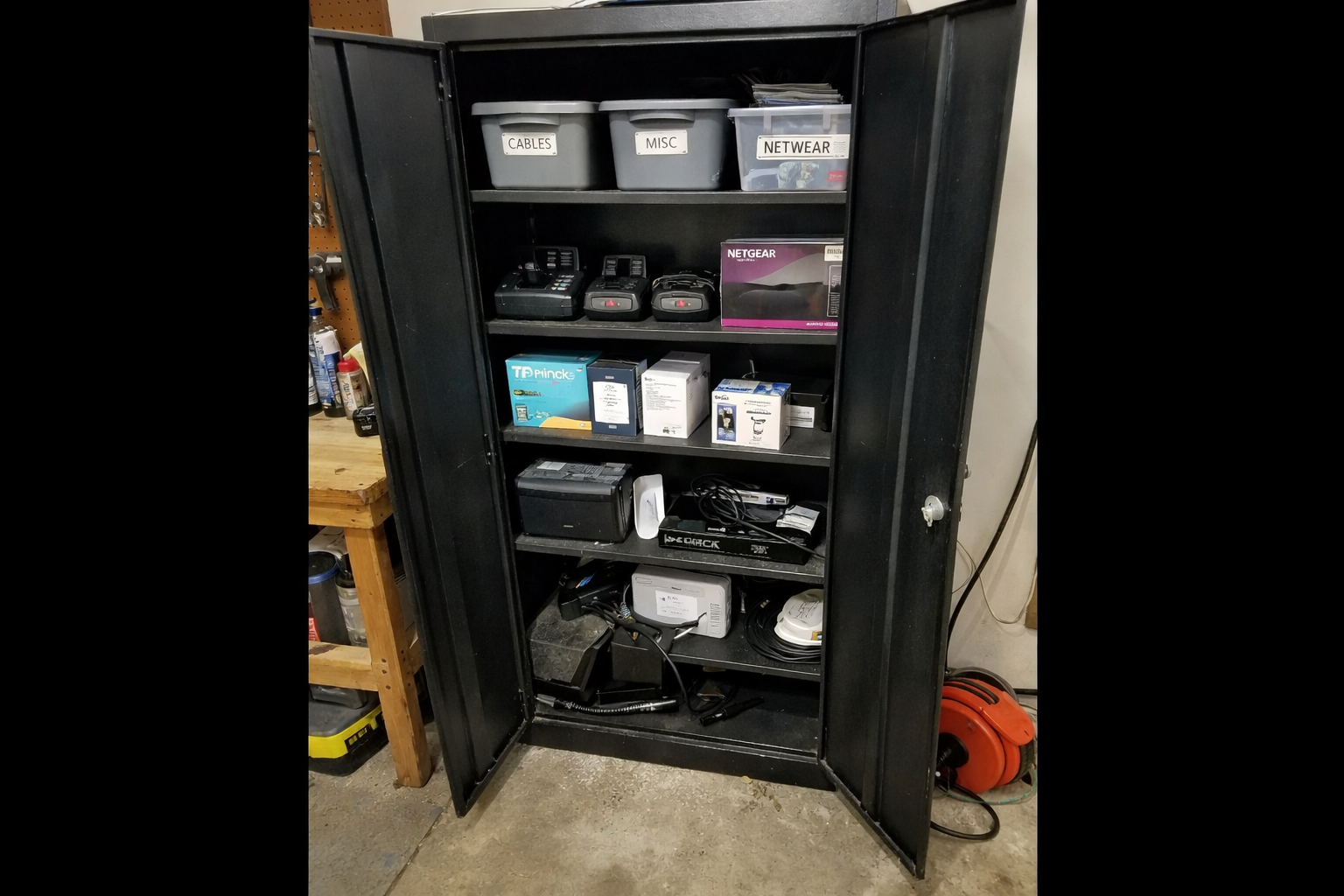
The biggest upgrade for weatherproofing my setup was getting sensitive-but-not-fragile gear off open shelves and into the SISESOL metal storage cabinet. This is where I keep boxed sensors, spare switches, cable spools, patch panels, backup routers, and consumables I don’t want collecting garage grime. Metal makes more sense to me than cheap particleboard in a garage. It wipes down easily, doesn’t mind temperature swings as much, and generally feels more appropriate for the environment. The wheels are handy too, though I’d call them more of an occasional repositioning feature than something I’d want to roll around constantly once the cabinet is loaded.
What I Appreciate
- ✅ Enclosed storage keeps dust and garage air off important gear
- ✅ Adjustable shelves make it easier to mix tool storage with tech storage
- ✅ Metal construction feels right for a workshop instead of an office
What Frustrates Me
- ❌ Assembly takes some patience, especially if you hate sheet metal cabinet builds
- ❌ Deep storage is great until small items get lost in the back without bins
Docking Drawer Safety Disconnect
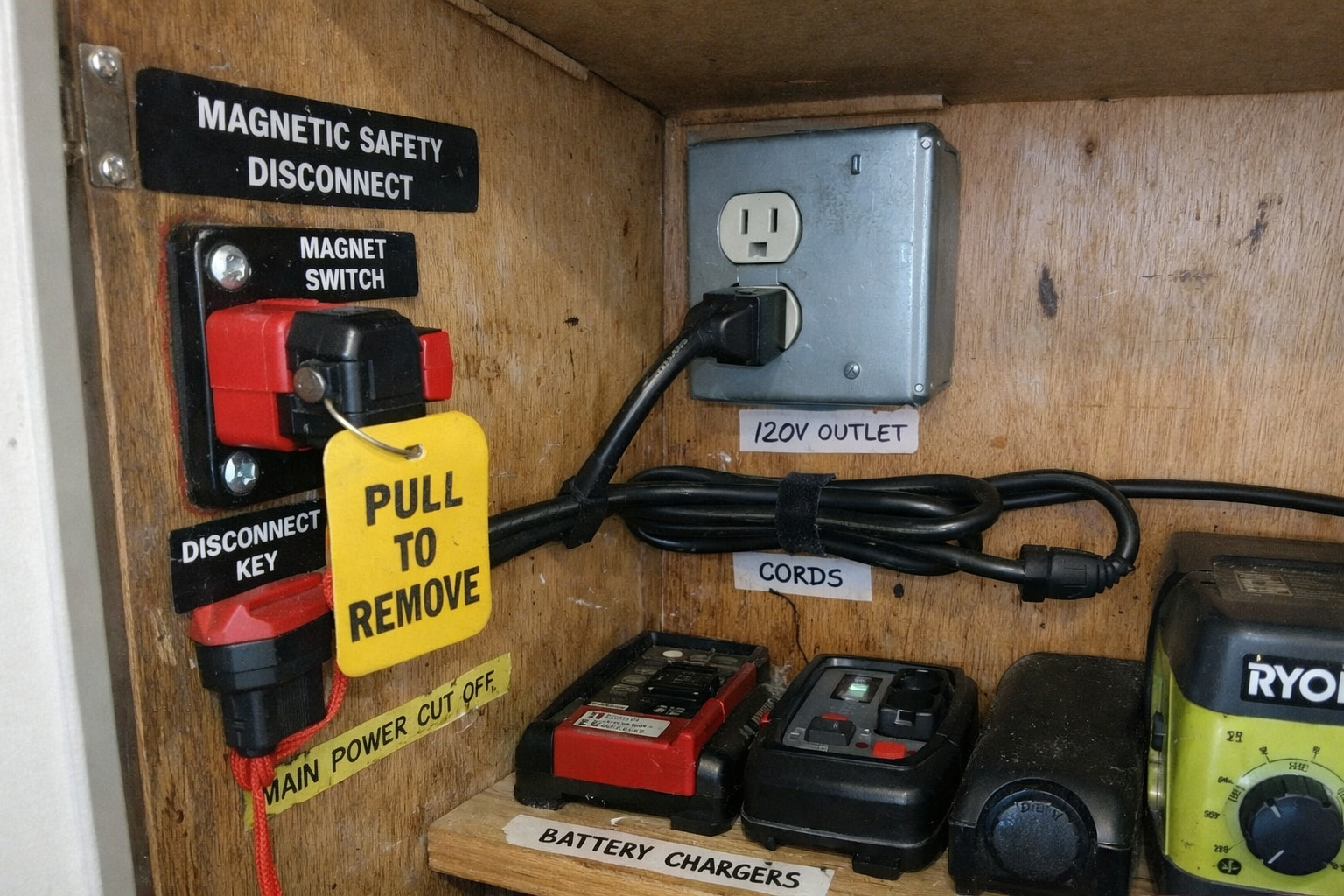
This is the most niche item here, but also one of the smartest if your garage setup includes enclosed charging or powered gear. I used the Docking Drawer Safety Disconnect in a cabinet-based power area where I wanted chargers and heat-producing accessories to shut off automatically when the door closed. It’s one of those products that scratches a very specific itch: making an enclosed powered space safer and less easy to forget about. In a smart workshop, I’m all for convenience, but not if convenience means hidden powered devices baking away behind a door.
What I Appreciate
- ✅ Adds a real safety layer for cabinet-based powered setups
- ✅ Automatic shutoff is the kind of “smart” feature I actually trust
- ✅ Useful for charger stations or enclosed appliance-style compartments
What Frustrates Me
- ❌ It’s a specialized solution, so not everybody needs it
- ❌ Installation needs care and should be approached like actual electrical work, not gadget setup
What Each Piece Solved in My Garage
| Need | What I Used | Why It Helped |
|---|---|---|
| Visible tool storage | INCLY Pegboard Kit | Got hand tools and small parts off the bench and into clear sight lines |
| Cleaner protected power runs | 12 AWG THHN Wire Set | Helped create a more deliberate conduit-based wiring setup |
| Protection for delicate gear | Hard Storage Case | Keeps adapters, meters, and small electronics away from dust and moisture |
| Enclosed workshop storage | SISESOL Metal Cabinet | Gives tools and home lab overflow a better environment than open shelving |
| Safer powered cabinet zone | Docking Drawer Safety Disconnect | Shuts power off automatically in an enclosed compartment |
What I Still Want to Improve
The garage is a lot better now, but I’m not pretending it’s finished. My next step is adding better humidity awareness and a more deliberate “clean bench” area for board-level repair work. Right now, the workshop is weather-tolerant and organized, but not fully climate-managed. For general DIY repairs, smart home installs, and home lab staging, that’s enough. For long-term electronics testing, I still prefer bringing the really sensitive stuff inside.
I’m also working toward a better battery charging zone with clearer labels, dedicated cable lengths, and fewer mystery power bricks. That sounds like a small thing until you’ve wasted fifteen minutes trying to figure out which adapter belongs to which device while standing in a cold garage.
💡 The Final Verdict: Worth It If Your Garage Is Doing Real Work
Building a weatherproof garage smart workshop is absolutely worth the time if your garage is where you repair things, charge tools, store networking gear, or tackle home improvement projects on a regular basis. The biggest win is not just “organization.” It’s reducing friction and protecting your equipment so you can actually start work without digging, untangling, or second-guessing safety. If you only use your garage twice a year, you probably do not need all of this. But if your garage is your repair zone, smart home staging area, or overflow home lab, a pegboard system, enclosed cabinet storage, protected small-item cases, and smarter power planning make a very noticeable difference.
Disclaimer: As an Amazon Associate, I earn from qualifying purchases.
Author
-

Hi, I’m Andrew — an IT support specialist, smart home consultant, and someone who has spent more time than I’d probably admit fixing, upgrading, and reorganizing tech around the house.
I’m based in Seattle, and this blog grew out of years of hands-on trial and error with smart home gear, home lab setups, repair tools, and all the little accessories that make a system easier to live with. I’ve always liked understanding how things work, taking them apart when necessary, and finding better ways to set them up the second time around.
Here, I write about smart home products, DIY tech tools, server rack accessories, cable management solutions, and display gear for collectibles. Most of what I cover is practical, everyday equipment — the kind of stuff that sounds simple until you actually have to install it, troubleshoot it, or live with it for a few months.
My approach is straightforward and honest. I like step-by-step setup, real-world testing, and explaining what a product is actually like to use, not just what the box promises. That includes calling out flimsy materials, bad instructions, confusing installation, or design choices that make no sense once you start working with the product. If something is well made and easy to use, I’ll say that too.
A lot of my reviews come from real projects at home — building out servers, improving smart home automation, cleaning up cable messes, repairing devices, and figuring out better ways to store and display the things I care about.
If you like practical gear, clear explanations, and honest feedback from someone who actually installs the stuff himself, you’ll probably feel at home here.



Leave a Reply