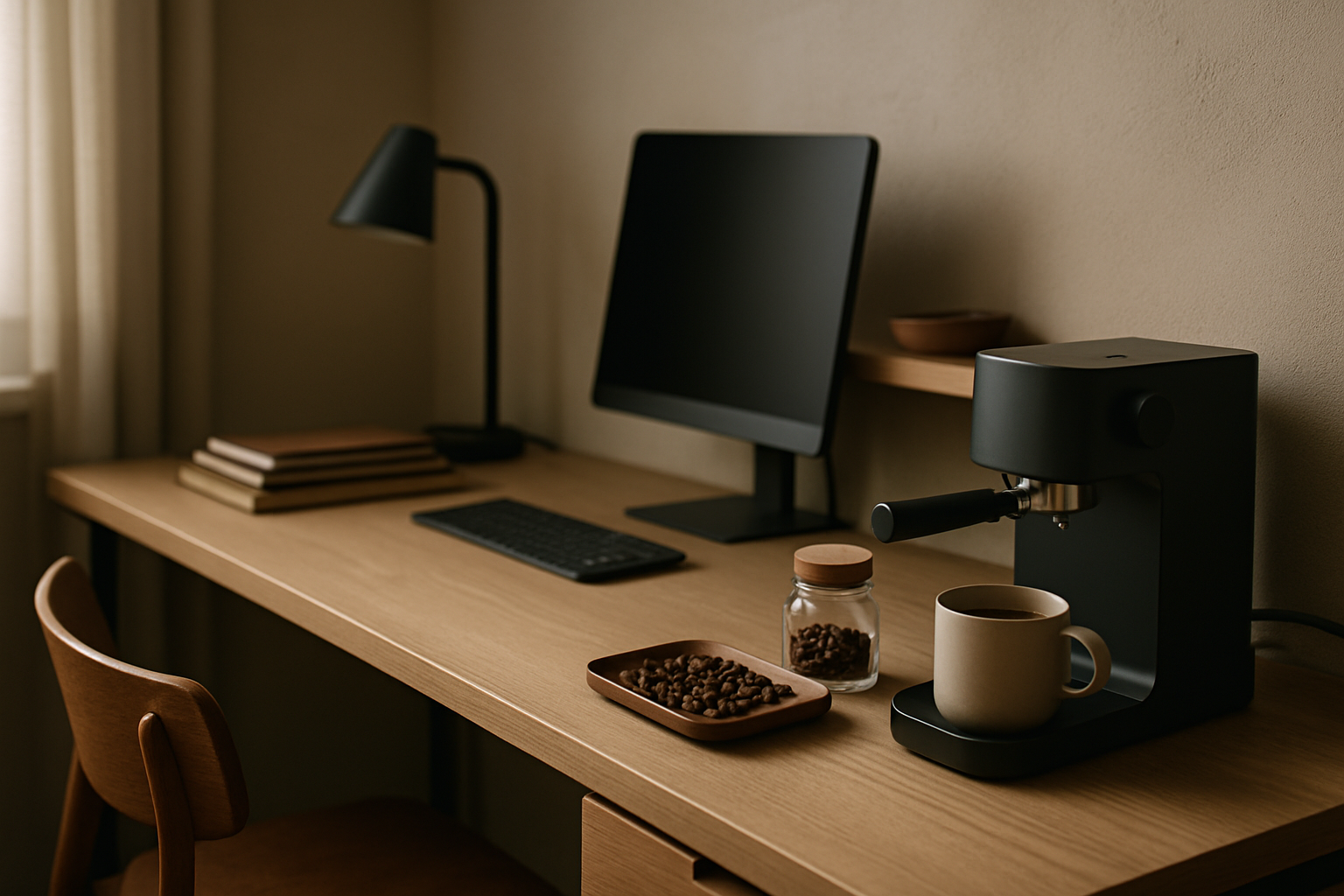
For a long time, I thought a better coffee setup would automatically make my workdays better. What actually happened was the opposite: I kept adding gear to a small New York apartment office until my desk started feeling like a crowded break room. Cables crept everywhere, coffee tools migrated into my keyboard space, and the whole thing created more friction than focus. The version that finally worked was not the fanciest one. It was the one that respected square footage, cleanup time, and the reality that I still needed a serious workspace by 9 AM.
If you’re trying to build a premium desk-side coffee corner in a small home office, I think the goal is pretty simple: better coffee, fewer steps, and almost zero visual noise. That’s the standard I used for everything below.
What Actually Needed Fixing in My Office
Before pulling out my card, I had to get honest about what was broken. It was not just “I want espresso near my desk.” The real issue was that my coffee routine kept interrupting deep work in the worst way. I would either leave my office and lose momentum in the kitchen, or I would try to keep coffee gear nearby and end up with a cluttered, messy side station that made the room feel tighter.
After a few rounds of trial and error, I realized a desk-side coffee corner in a small home office has to do four things well:
- Keep the footprint compact enough that it does not visually dominate the room
- Make prep fast enough for weekday use, not just weekend ritual brewing
- Contain mess, especially grounds, drips, and cables
- Look intentional enough that it blends into a premium workspace instead of reading like kitchen overflow
That last point mattered more than I expected. I work all day staring at patterns, dashboards, and screens, so visual clutter hits me pretty quickly. When the coffee corner looked sloppy, I felt it. My focus dipped because the room felt unfinished. Once I treated the setup like workspace infrastructure instead of hobby gear, everything got better.
My Current Desk-Side Coffee Corner
Gevi Commercial Espresso and Coffee Maker
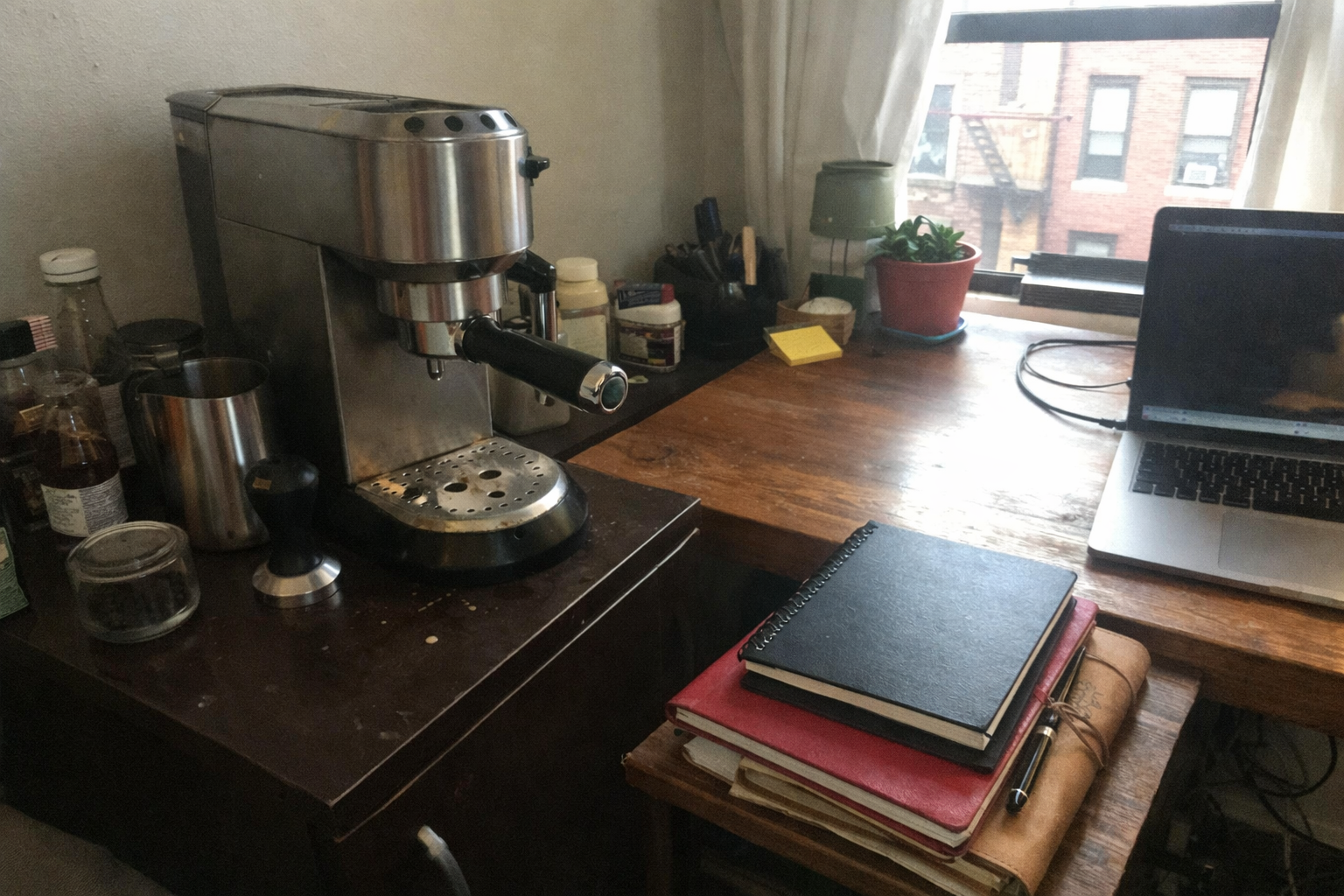
The anchor of the whole setup is the Gevi espresso machine. I chose it because I needed something compact enough for a side cabinet, but still substantial enough to feel like a real espresso station instead of a compromise appliance. The stainless housing helps it visually hold up in a more premium workspace, and the pressure gauge gives me just enough feedback to make dialing in shots feel intentional. It is not a giant prosumer machine, and that is exactly why it works here. In a small office, size discipline is part of the luxury.
What I Appreciate
- ✅ Compact footprint works well on a narrow cabinet or credenza
- ✅ Stainless exterior looks cleaner and more durable than cheap plastic machines
- ✅ Steam wand adds flexibility for milk drinks when I want a softer afternoon coffee
- ✅ Pressure gauge makes the workflow feel more controlled
What Frustrates Me
- ❌ Still requires regular wipe-downs if you want the stainless finish to stay looking sharp
- ❌ Semi-automatic workflow is slower than pushing a pod into a machine
- ❌ You need a little practice to get consistently good results
Coffee Dosing Cup with Rechargeable Precision Scale
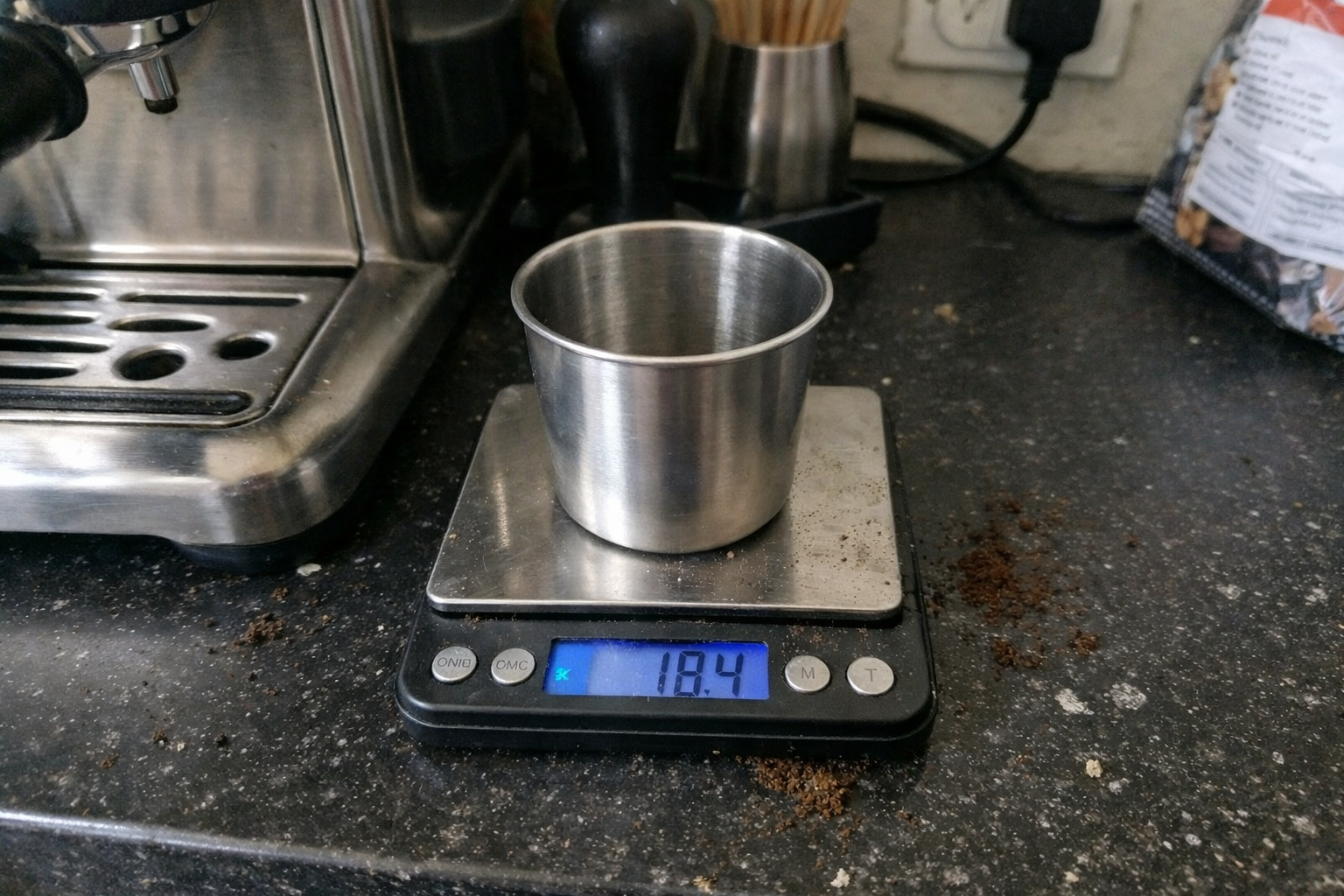
This dosing cup and precision scale set solved one of the most annoying small-space problems I had: coffee grounds ending up everywhere. In a larger kitchen, a little mess is easier to ignore. Next to a desk with a mechanical keyboard and documents, it is not. I like that the cup pairs neatly with a 58mm workflow and that the scale is precise enough to make repeatable shots realistic. More importantly, it compresses two steps into one cleaner process.
What I Appreciate
- ✅ Cleaner transfer from grinder to portafilter with less countertop mess
- ✅ Rechargeable scale cuts down on battery swapping
- ✅ Stainless construction feels durable and easy to wipe clean
- ✅ Helpful if you care about consistency and not just caffeine delivery
What Frustrates Me
- ❌ Precision tools add one more thing to maintain and keep charged
- ❌ Probably overkill if you only want casual coffee without dialing in dose
- ❌ Small scales always require a little care around water and steam
FORLIM Portable Electric Coffee Grinder
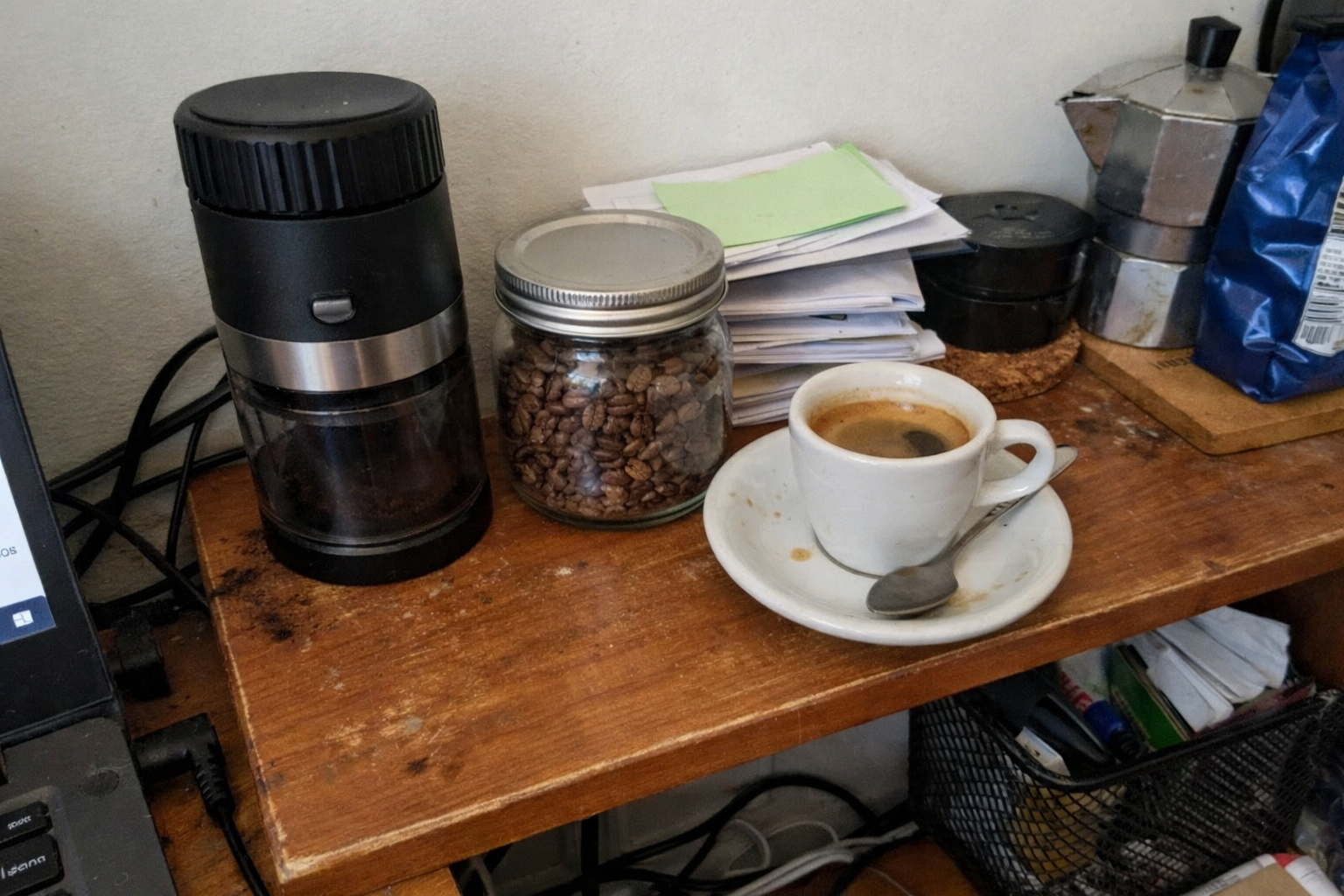
I am picky about grinders because they usually determine whether a compact coffee setup feels premium or fake-premium. The FORLIM portable electric grinder made sense for this particular station because it keeps the footprint small and removes another permanent cord from the area. The single-serve capacity is actually a benefit in my office because it naturally limits clutter and encourages fresh grinding instead of storing half-used grounds nearby. I also like the broad range of grind settings since I bounce between espresso-style drinks and the occasional slower brew on weekends.
What I Appreciate
- ✅ Cordless design keeps the station visually cleaner
- ✅ Compact body is easier to store than a full-size countertop grinder
- ✅ Burr grinding gives better control than a basic blade grinder
- ✅ Single-dose workflow pairs well with a small office coffee routine
What Frustrates Me
- ❌ Small capacity means it is built for one drink at a time
- ❌ Rechargeable gear is great until you forget to charge it
- ❌ If you make several drinks back-to-back, a larger grinder would be more efficient
Magnetic Cable Hider Raceway Kit
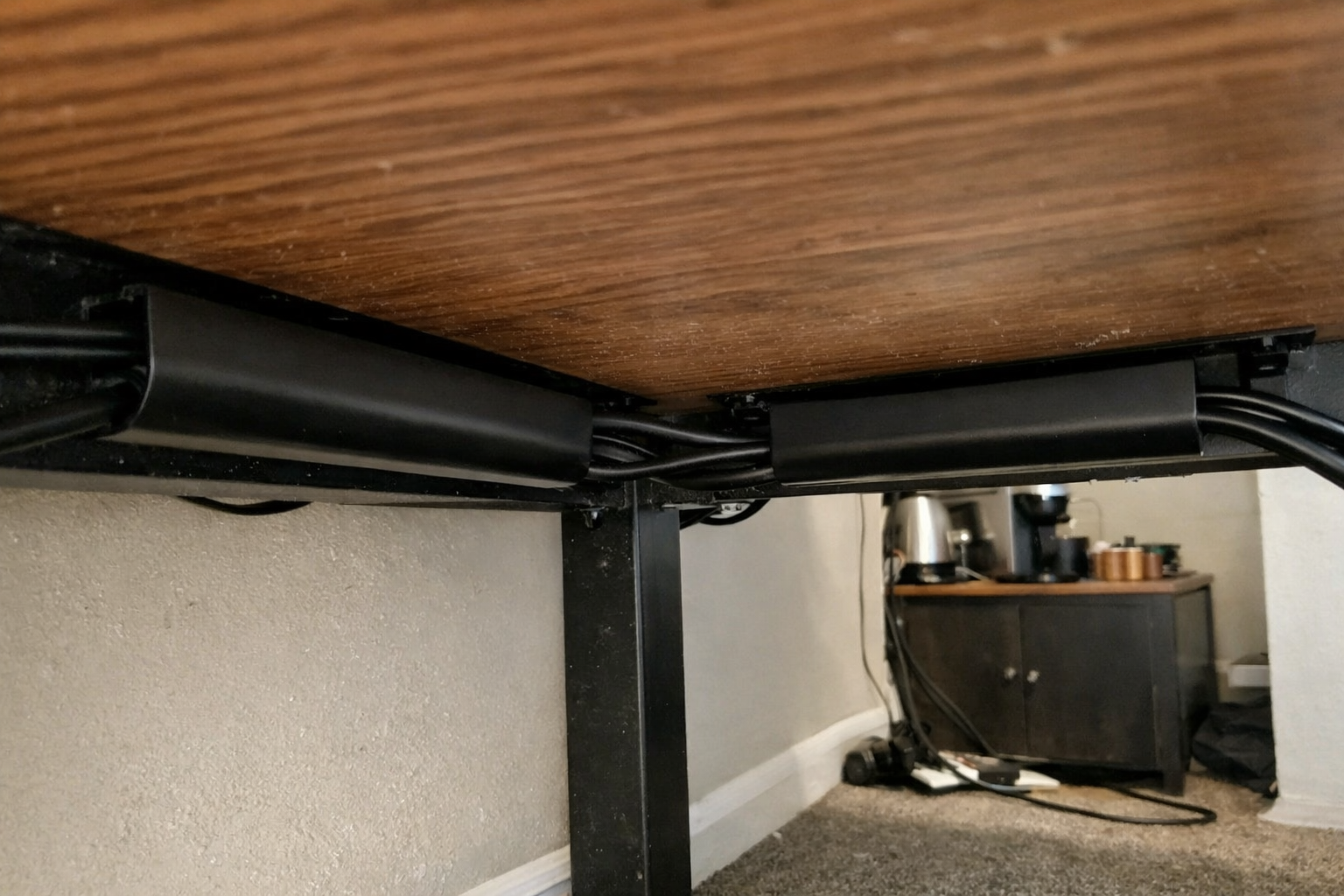
This is the least glamorous item here and maybe the most important. The magnetic cable raceway kit is what stopped the coffee corner from bleeding into the rest of my office. When you add a machine, a grinder, and charging cables to a small room, visible wires instantly make the whole setup feel cheaper and more crowded. I like that these can be repositioned more easily than some permanent cable solutions, which matters when you’re still experimenting with furniture layout.
What I Appreciate
- ✅ Hides the ugliest part of any desk-side coffee station
- ✅ Magnetic mounting is useful if you tweak your setup often
- ✅ Larger openings handle thicker power cables better than tiny clips
- ✅ Helps separate “workspace” from “appliance mess” visually
What Frustrates Me
- ❌ Cable management is still tedious, even with better hardware
- ❌ Some desk materials and layouts are easier to work with than others
- ❌ It solves visibility, not the total number of cords you own
Bamboo Stackable Storage Drawers
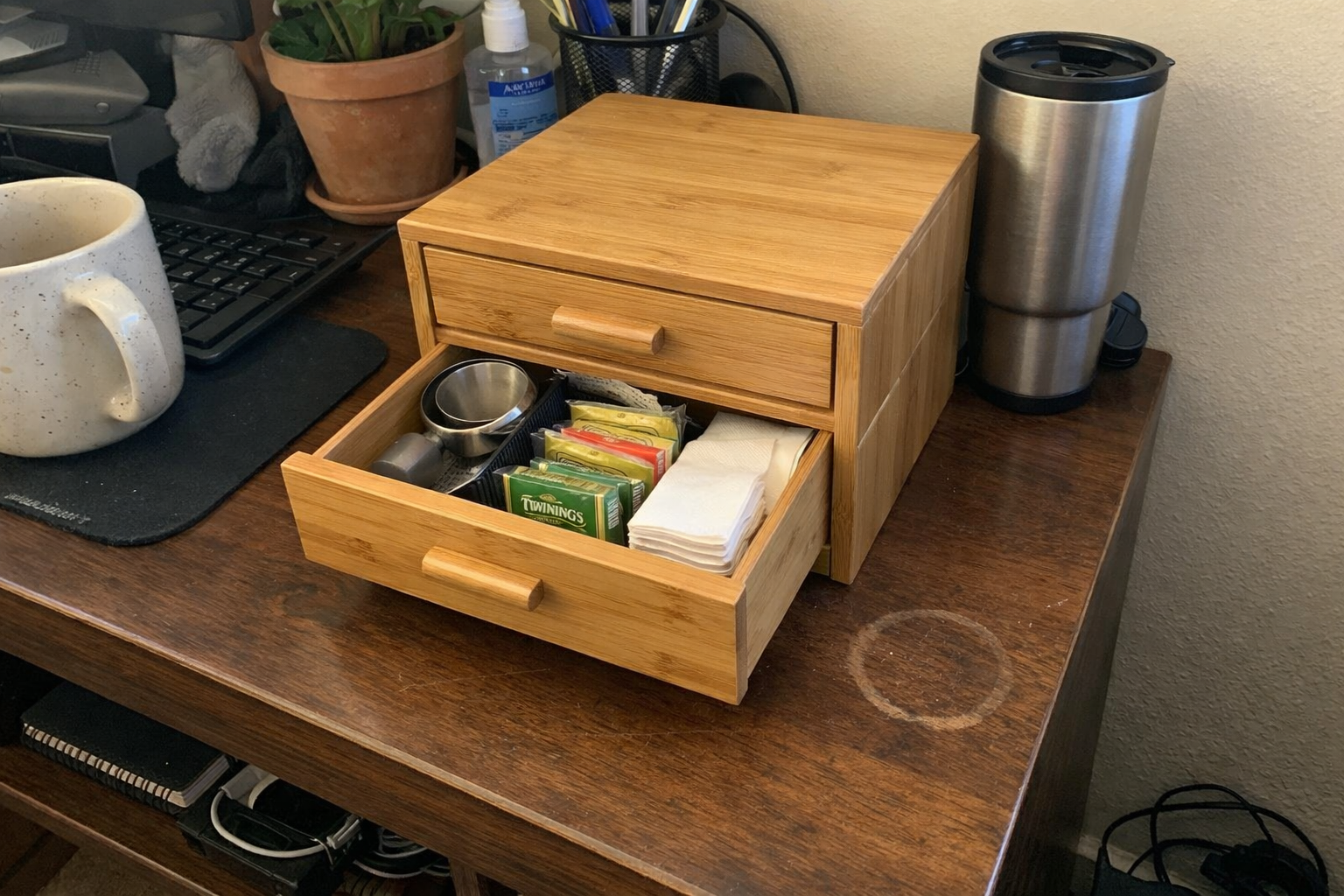
The final piece was containment. I use the bamboo stackable storage drawers for the unglamorous but necessary stuff: cleaning cloths, extra cups, sweetener packets when guests are over, spare beans, and a few small accessories. Open storage looks great in photos and gets chaotic fast in real life. These drawers give me enough hidden storage to keep the coffee corner calm without forcing me to install anything bulky. The bamboo also softens all the metal and black gear, which helps the station feel more like furniture than equipment.
What I Appreciate
- ✅ Keeps small coffee items out of sight but easy to reach
- ✅ Stackable layout works well in tight vertical spaces
- ✅ Bamboo finish adds warmth to a tech-heavy office
- ✅ Useful beyond coffee if your needs change later
What Frustrates Me
- ❌ You still need discipline or the drawers become random junk storage
- ❌ Best for smaller accessories, not large bags or oversized tools
- ❌ Acrylic drawers can show dust and fingerprints over time
| Category | Premium but Compact Choice | What It Replaced in My Setup |
|---|---|---|
| Brewing | Gevi espresso machine | Walking to the kitchen and losing work momentum |
| Grinding | FORLIM portable grinder | Bulkier full-size grinder that dominated the cabinet |
| Precision | Dosing cup with scale | Eyeballing doses and cleaning stray grounds constantly |
| Cable control | Magnetic raceway kit | Loose cords hanging behind the desk-side cabinet |
| Storage | Bamboo stackable drawers | Open piles of coffee tools and supplies |
A Few Small-Space Rules I Learned the Hard Way
If I were building this coffee corner again from scratch, I would follow three rules.
- Keep the station off the main desk surface. Coffee and laptops can coexist, but they should not share the same active work zone.
- Limit every item to one job or one footprint. If something is large and only occasionally useful, it probably does not belong in a small office.
- Hide supplies before you hide the machine. People obsess over making the espresso machine look good and forget that loose pods, bags, brushes, and cables are what create visual clutter.
That has been the biggest shift for me. A premium desk-side coffee corner is not about owning more coffee gear. It is about reducing the number of decisions and cleanup steps between “I need a reset” and “I am back in focus.”
What I Still Want to Improve
This setup is in a very good place, but I am still refining it. The next thing I want is better cup storage that does not eat counter depth, probably something vertical or wall-adjacent. I am also still testing whether I want a tiny mat under the machine to catch stray drips without making the station look bulky. My target is the same as when I started: make the coffee break feel restorative, not distracting.
That matters on long remote-work days. When the station is dialed in, stepping over for a quick shot feels like a controlled reset instead of another household chore. And in a small home office, that difference is huge.
💡 The Final Verdict: Worth It If You Treat It Like Workspace Design
Building a premium desk-side coffee corner is absolutely worth the time and money if you work from home regularly, care about your environment, and have enough discipline to keep the setup compact. I would not recommend this approach to someone who just wants the fastest possible caffeine. But if your goal is better coffee, fewer kitchen detours, and a calmer small office, a thoughtful setup like this can improve your workflow more than you’d expect. The key is not chasing the biggest machine or the most gear. It is building a coffee station that earns its square footage every day.
Disclaimer: As an Amazon Associate, I earn from qualifying purchases.
Author
-

Hi, I’m Mateo — a remote business analyst and workspace consultant based in New York City.
I started this blog out of a long-term interest in productivity, ergonomics, and the tools that make daily work more efficient. Over the years, I’ve spent a lot of time refining my own setup and comparing different products, from premium office furniture to mechanical keyboards and coffee equipment for the home office. What began as a personal habit turned into a more structured way of reviewing and analyzing workspace gear.
This blog focuses on premium productivity tools and ergonomic equipment, with an emphasis on performance, build quality, durability, and long-term value. I cover products like standing desks, ergonomic chairs, multi-monitor setups, keyboard components, and high-end coffee machines, always with attention to how they hold up in real working conditions.
My approach is straightforward and detail-oriented. I look at products the same way I look at systems: by evaluating trade-offs, comparing alternatives, and asking whether the higher price is actually justified. That means I often compare premium products against strong mid-range options, break down the pros and cons clearly, and focus on return on investment rather than hype.
Outside of work, I’m interested in custom mechanical keyboards, espresso, and indoor cycling — all things that, in different ways, involve precision, consistency, and incremental improvement.
If you’re building a workspace that is comfortable, functional, and designed to last, this blog is for you.
Leave a Reply