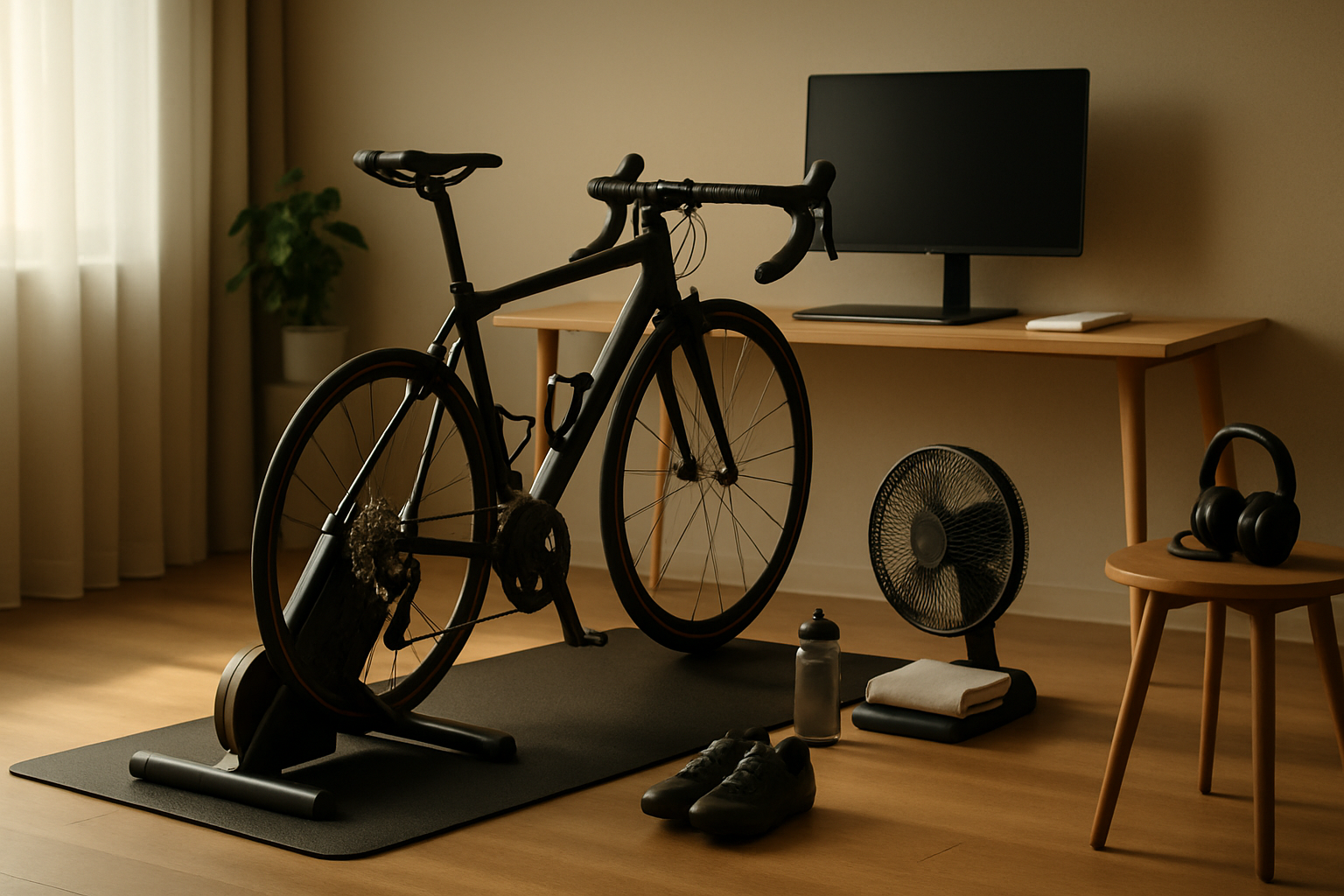
For a long time, I treated indoor cycling like a separate hobby that had to live outside my work routine. That sounds reasonable until you’re working from a New York apartment, your desk already owns most of the room, and every workout starts to feel like a mini furniture-moving project. What finally pushed me to fix it wasn’t motivation. It was friction. If a ride took 20 minutes of setup, I skipped it. If it was noisy, I felt guilty. If it left my workspace sweaty and chaotic, it bled into the rest of my day.
I wanted a home cycling setup that actually supported a performance mindset without turning my office into a garage gym. That meant compact gear, low noise, fast transitions, and a few small accessories that solved annoyingly practical problems better than the flashy upgrades ever did.
What Actually Needed Fixing
Before pulling out my credit card, I had to figure out what was truly broken. It wasn’t that I lacked access to cardio. It was that my setup punished spontaneity. As a remote analyst, my day is full of blocks: meetings, dashboards, writing, calls, more meetings. The only way I’m consistently getting on the bike is if I can use it in short, deliberate windows without derailing everything around it.
I realized my criteria were pretty specific:
- The bike had to be quiet enough for apartment living and midday rides between calls.
- The footprint had to stay tight so it didn’t visually dominate the room.
- I needed a screen solution that didn’t involve awkward balancing or neck strain.
- Sweat management mattered more than I expected, especially if the bike lived near my desk.
- The setup had to feel stable and durable enough that I’d trust it during hard intervals, not just easy spins.
That last point is big. I’ve used cheap fitness gear before, and the hidden tax is distraction. Wobble, noise, weak adjustment points, plastic flex, little rattles you keep hearing during every effort — those things add up. In the same way I care about keyboard tolerances or desk ergonomics, I care about whether a workout tool disappears into the background and lets me focus.
My Current Cycling Corner
Indoor Cycling Bike with 32-Level Magnetic Resistance
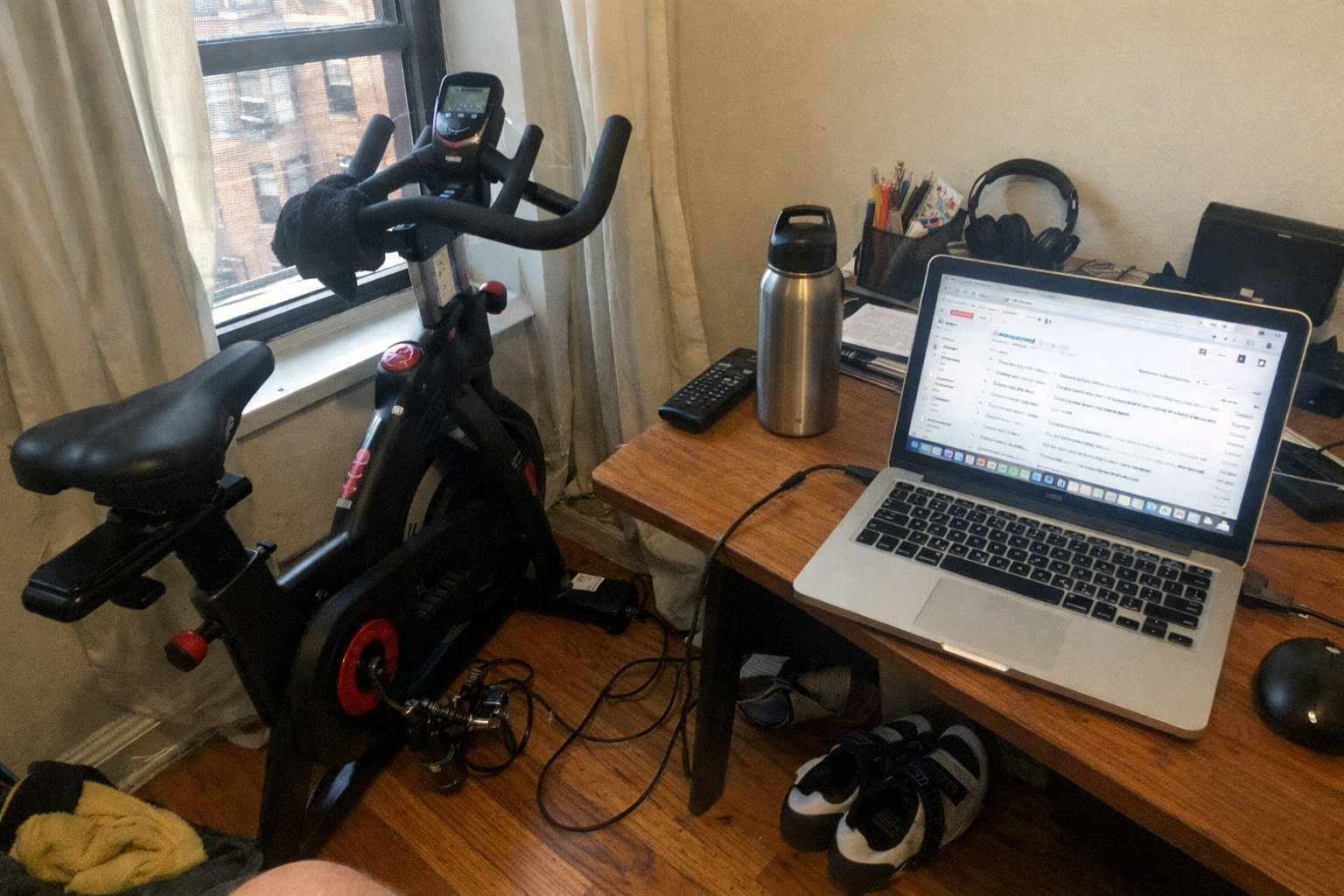
This is the anchor piece, obviously. I eventually went with this indoor cycling bike because the spec sheet aligned with what I actually care about at home: magnetic resistance, a relatively compact footprint, adjustability, and a frame that looked more serious than the bargain-bin bikes that tend to develop mystery noises after a few weeks. In use, the biggest win is how easy it is to leave in place. It doesn’t feel like a temporary compromise. It feels like dedicated equipment that just happens to fit inside a working apartment.
The noise level is the real quality-of-life feature. I’m not going to pretend any home fitness setup becomes invisible, but a quiet belt-driven bike is the difference between “I can squeeze in a 25-minute ride before my 2 PM call” and “I should probably wait until later,” which usually means never. I also appreciate that the fit range is broad enough to dial in seat and handlebar position instead of accepting a vague, almost-right posture.
What I Appreciate
- ✅ Quiet enough for apartment-friendly use during the workday
- ✅ Magnetic resistance feels more controlled than the friction-style bikes I’ve tried
- ✅ Stable frame inspires confidence during harder standing efforts
- ✅ Compact enough to dedicate a real corner to it without killing the room
- ✅ Adjustability helps a lot if you care about repeatable fit
What Frustrates Me
- ❌ Stock saddles are almost never magical, so expect some adaptation time
- ❌ Basic bikes like this still rely on you to create your own training ecosystem
- ❌ Lighter flywheel feel may not mimic every premium studio bike exactly
KDD Spin Bike Tablet Holder Mount
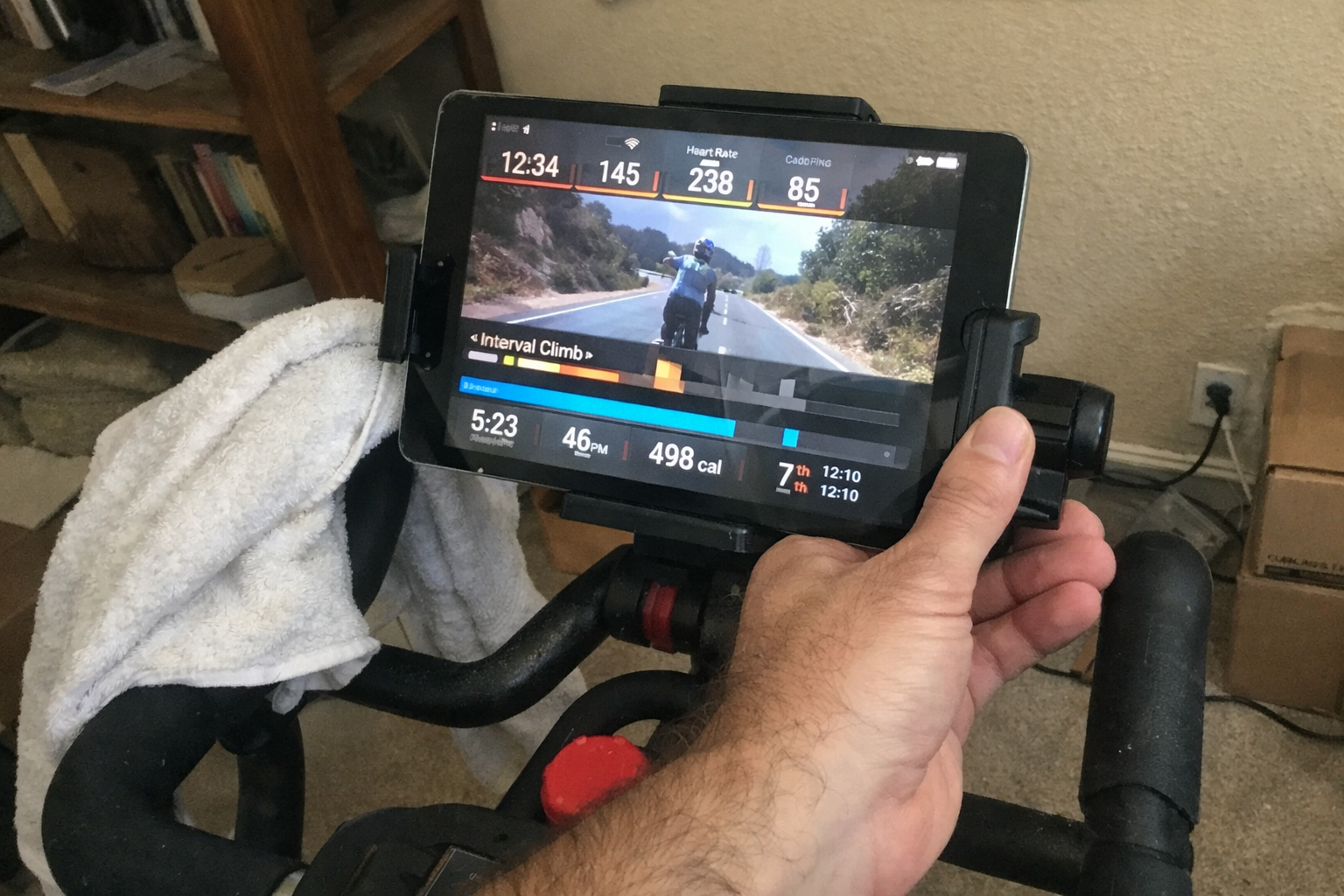
This KDD tablet holder mount is one of those accessories that sounds minor until you use it every day. I originally tried propping a tablet on a nearby shelf and then a desk stand, both of which were clumsy. My neck angle was wrong, I had to keep glancing off-center, and the setup made short rides feel more annoying than they should have. Clamping the screen directly to the bars fixed that immediately.
What I like here is simple: it holds position. If a mount sags or vibrates, it stops being useful. This one feels secure enough for intervals, and the viewing angle adjustment helps whether I’m following a class, watching race footage, or just parking a metrics dashboard in front of me. For a low-cost upgrade, the ROI is high because it removes setup friction every single session.
What I Appreciate
- ✅ Much better screen positioning than balancing a tablet on furniture
- ✅ Clamp feels secure with both phones and tablets
- ✅ Easy to reposition depending on the workout
- ✅ Useful beyond cycling if you rearrange equipment later
What Frustrates Me
- ❌ It adds another piece to the cockpit, so things can feel crowded
- ❌ You still need to be thoughtful about where cables and charging live
- ❌ Bulkier tablets can make adjustment slightly more fiddly
Saris Training Mat
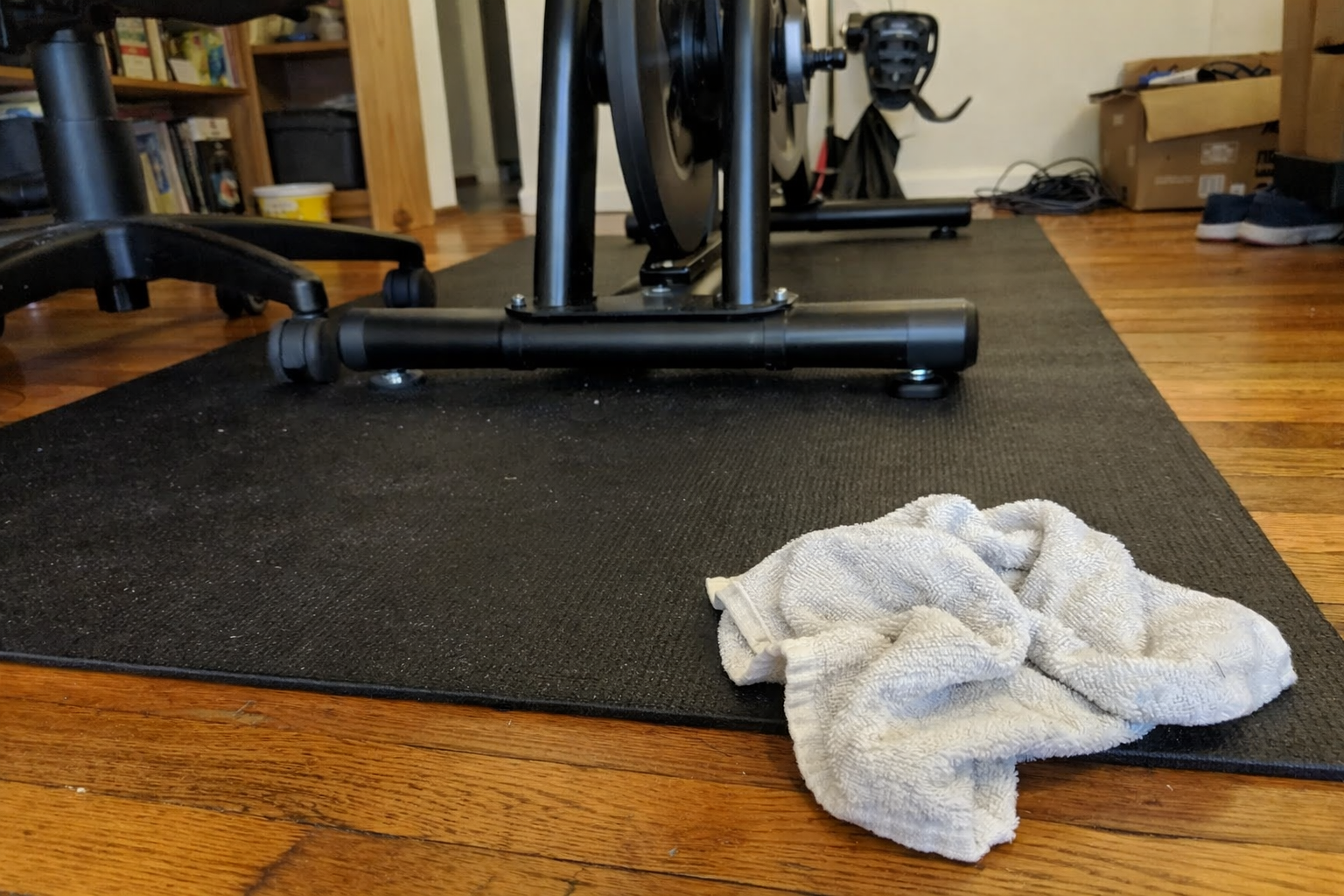
I resisted buying a dedicated mat longer than I should have because it felt optional. It isn’t. The Saris training mat does three unglamorous but important jobs: it protects the floor, cuts down vibration, and helps keep the bike planted. In a mixed-use room, that matters. I don’t want sweat creeping onto hardwood, and I definitely don’t want the bike subtly shifting over time.
This is one of those purchases that doesn’t make the workout more exciting, but it makes the whole corner feel intentional and easier to maintain. If your bike sits near your desk like mine does, a mat is less about aesthetics and more about containment. It gives the setup boundaries, which weirdly helps the room feel calmer.
What I Appreciate
- ✅ Helps define the cycling zone inside a work-focused room
- ✅ Reduces floor mess from sweat and grime
- ✅ Adds a bit of vibration and noise control
- ✅ Helps keep the bike from creeping during hard efforts
What Frustrates Me
- ❌ It’s not exciting, which makes it easy to deprioritize
- ❌ You still need to wipe it down regularly if you sweat a lot
- ❌ Large mats can be slightly annoying to reposition in a tight room
Handlebar Towel
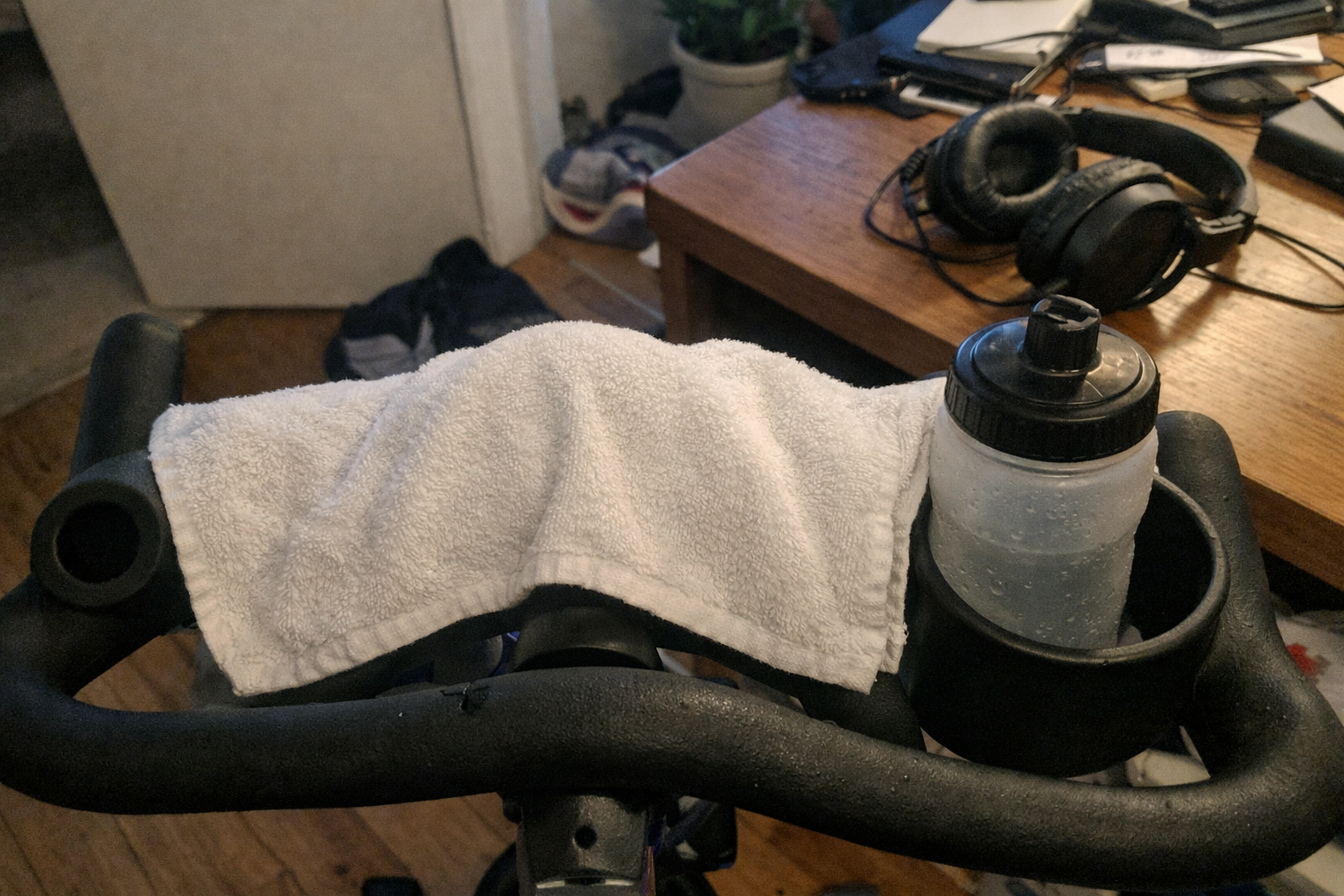
A handlebar towel sounds almost too specific until your hands start slipping halfway through a harder ride. I like using a dedicated handlebar towel because it keeps sweat from collecting where I’m constantly shifting grip. Even if the exact fit is designed around a particular bar shape, the bigger takeaway is that cockpit sweat management is worth solving on purpose.
For me, this is less about comfort than consistency. If I know the bars are staying dry, I don’t have to think about it. And since this bike lives near my workspace, anything that contains sweat before it starts dripping onto the frame, mat, and floor earns its keep pretty quickly.
What I Appreciate
- ✅ Keeps grip area drier during harder sessions
- ✅ Easier to toss in the wash than constantly deep-cleaning handlebars
- ✅ Makes the bike feel more comfortable in longer rides
What Frustrates Me
- ❌ Fit can be specific depending on your handlebar shape
- ❌ Another soft item to wash regularly
- ❌ Not essential on day one if your budget is tight
baleaf Men’s 7-Inch Padded Cycling Shorts
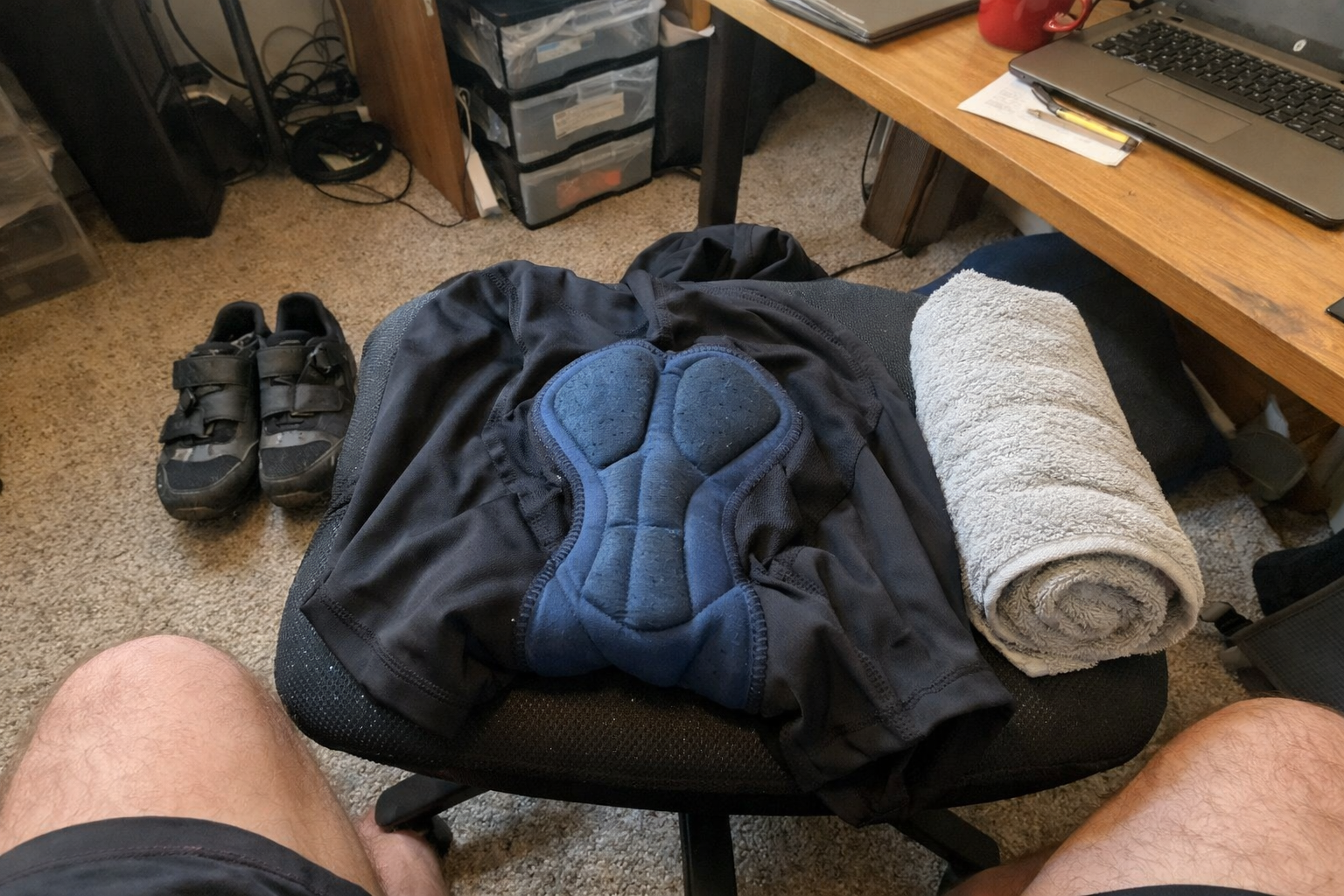
I put off padded shorts longer than I should have because I assumed I just needed to “get used to the saddle.” Some adaptation is real, but there’s no prize for unnecessary discomfort. I added these baleaf padded cycling shorts for longer sessions and interval days, and they made the bike easier to return to consistently. That matters more than chasing some purist idea of toughness.
What I typically look for in budget-to-midrange cycling apparel is simple: pad placement that doesn’t feel awkward, fabric that doesn’t bunch badly, and pockets or construction that still feel practical off the bike. These are not luxury bibs, but that’s also the point. For a home setup, I want gear that delivers most of the function without turning every ride into a wardrobe decision.
What I Appreciate
- ✅ Noticeably improves comfort on longer indoor rides
- ✅ Easier entry point than spending big on premium kit
- ✅ Loose-fit design feels less fussy for at-home training
- ✅ Zipper pockets are handy before and after a session
What Frustrates Me
- ❌ Fit preferences are extremely personal with cycling shorts
- ❌ Padding quality won’t match higher-end bibs
- ❌ Indoor training still gets hot, so fabric feel matters a lot
What Matters Most if You’re Choosing Between Cheap and Thoughtful
| Category | Budget Mistake I’d Avoid | What’s Worth Paying Attention To |
|---|---|---|
| Bike | Choosing purely on appearance or promise-heavy marketing copy | Noise, stability, fit adjustability, and how easy it is to leave set up |
| Screen Setup | Using random furniture as a tablet stand | A stable mount that keeps your head and eyes in a natural position |
| Floor Protection | Skipping a mat because it feels non-essential | Sweat containment, vibration control, and keeping the bike in place |
| Comfort | Assuming discomfort is just part of indoor cycling | Grip management, shorts, and fit tweaks that increase repeatability |
| Workflow | Building a setup that must be assembled every ride | Fast transitions between work mode and training mode |
If you only change one thing, I’d start with reducing friction rather than maxing out features. A slightly less fancy bike that stays quiet, stable, and ready to ride will beat a more ambitious setup that constantly asks for rearranging, troubleshooting, or cleanup.
What I’m Still Tweaking
This corner is good now, but it’s still evolving. The next upgrade I’m considering isn’t another flashy accessory. It’s better airflow. Once your rides get harder and more structured, temperature management becomes a real performance variable, especially in a smaller apartment. I’m also still refining how I stage shoes, towel storage, and post-ride cleanup so I can finish an interval block and be back at my desk without the room feeling hijacked.
That’s really the goal: not building a perfect pain cave, but building a cycling corner that respects the rest of your life. If your workspace and workout space have to coexist, the setup should lower resistance in both directions.
💡 The Final Verdict: Worth It If Consistency Is Your Real Goal
A high-performance home cycling corner is absolutely worth the time and money if you’re trying to make training fit around a real workday instead of competing with it. I’d especially recommend this kind of setup for remote workers, apartment dwellers, and anyone who keeps skipping workouts because starting feels too inconvenient. You do not need a luxury studio clone. You need a quiet, stable bike, a few smart accessories, and a setup that makes it easy to ride without disrupting everything else.
Disclaimer: As an Amazon Associate, I earn from qualifying purchases.
Author
-

Hi, I’m Mateo — a remote business analyst and workspace consultant based in New York City.
I started this blog out of a long-term interest in productivity, ergonomics, and the tools that make daily work more efficient. Over the years, I’ve spent a lot of time refining my own setup and comparing different products, from premium office furniture to mechanical keyboards and coffee equipment for the home office. What began as a personal habit turned into a more structured way of reviewing and analyzing workspace gear.
This blog focuses on premium productivity tools and ergonomic equipment, with an emphasis on performance, build quality, durability, and long-term value. I cover products like standing desks, ergonomic chairs, multi-monitor setups, keyboard components, and high-end coffee machines, always with attention to how they hold up in real working conditions.
My approach is straightforward and detail-oriented. I look at products the same way I look at systems: by evaluating trade-offs, comparing alternatives, and asking whether the higher price is actually justified. That means I often compare premium products against strong mid-range options, break down the pros and cons clearly, and focus on return on investment rather than hype.
Outside of work, I’m interested in custom mechanical keyboards, espresso, and indoor cycling — all things that, in different ways, involve precision, consistency, and incremental improvement.
If you’re building a workspace that is comfortable, functional, and designed to last, this blog is for you.
Leave a Reply